
If you're tapering off Ozempic, Wegovy, Mounjaro, or Zepbound, the real test isn't the weight you've already lost — it's keeping your results once the drug's appetite-suppressing effect fades. New research suggests the weight regain many people fear after stopping a GLP-1 medication isn't inevitable, but it does require a plan built before the prescription runs out. Here's what the newest study found, why hunger and 'food noise' can rush back so quickly, and how gentler, herbal habit support can help bridge the gap.
Does Stopping GLP-1 Drugs Cause Weight Regain?
Yes — for many people, some weight regain is common after stopping a GLP-1 medication, largely because the hunger and fullness cues the drug had been quieting start to return once it clears your system. This isn't a personal failure; it's a predictable physiological shift, and it's exactly why researchers are now studying how to manage it.
Stopping is also more common than many assume. A pharmacist-supported GLP-1 program at NYU Langone Health that followed nearly 3,000 treatment-naive adults, with onboarding on day one and reassessments at months one and six, still recorded a 3.9% first-year discontinuation rate. Discontinuation also varied by drug, landing at 1.8% for tirzepatide and 6.1% for semaglutide. In other words, the 'what happens when I stop' question is one a lot of real patients are already living through.
What New Research Reveals About Preventing the Rebound
Researchers at Tufts University and the University of Texas Southwestern Medical Center wanted to know if structured support, such as wellness-app check-ins and tailored meal guidance, could meaningfully reduce the amount of weight regain people experience after stopping a GLP-1 drug, and the pilot results were encouraging.
Study co-author Kelseanna Hollis-Hansen pointed to the real gap this fills: people often get very little lifestyle and behavior-change coaching while taking a GLP-1 medication, because the drug itself is so effective at suppressing appetite. The problem shows up later — once the medication stops and hunger and appetite cues return, many people simply haven't built the strategies to manage that shift. The findings were published in the journal Obesity Science and Practice on October 7, making this one of the freshest data points in the entire GLP-1 'off-ramp' conversation.
Why Hunger and Food Noise Rush Back So Fast
GLP-1 medications work in part by slowing digestion and quieting hunger signaling in the brain. When the drug leaves your system, those same pathways reactivate — often within weeks, not months — which is why the return of appetite can feel sudden and overwhelming rather than gradual.
This is also why so much of the online conversation around 'maintenance' and tapering focuses on habits rather than willpower alone. If the body's hunger signaling resets quickly, the only real buffer is whatever routine you've already put in place: how you eat, how you move, and how you respond to a craving in the first ten minutes it shows up.
Building Your Post-GLP-1 Habit Bridge
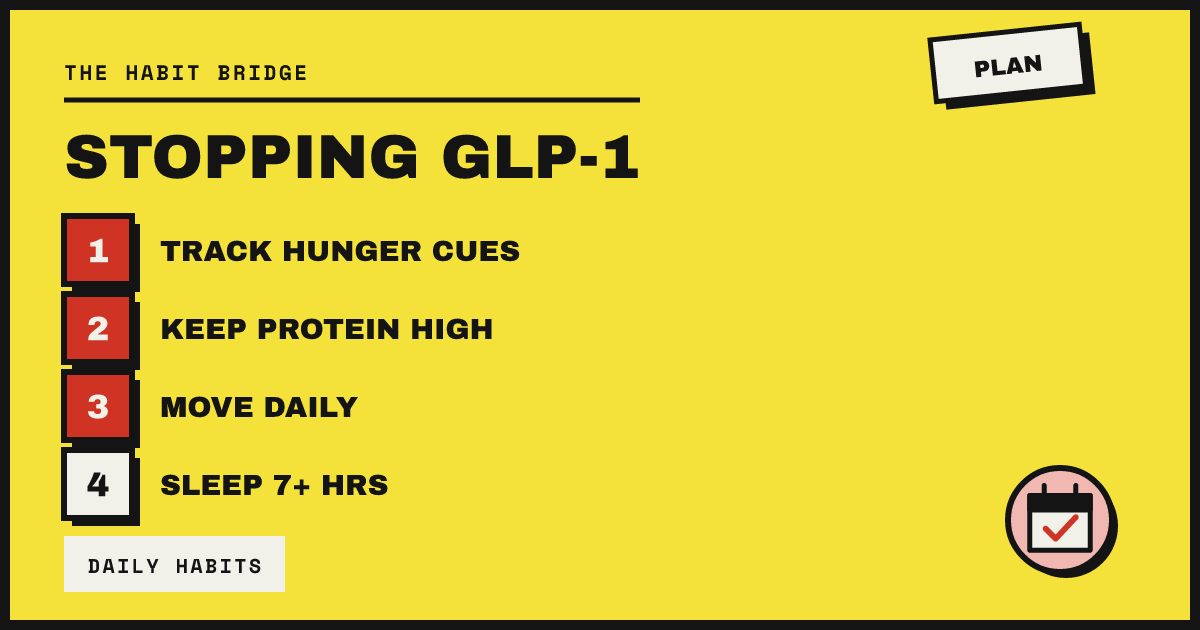
The structured-support research points to a simple truth: the habits that protect your results after a GLP-1 taper are the same ones that support anyone's weight-management goals. A few places to start, ideally before you ever reduce a dose:
- Track hunger on a simple 1–10 scale so you notice real hunger versus habit or stress eating.
- Anchor meals around protein and fiber, which slow digestion in a gentler, non-drug way.
- Keep daily movement consistent, since activity helps regulate appetite hormones over time.
- Protect sleep — poor sleep reliably intensifies next-day cravings and food noise.
None of this replaces medical guidance. If you're adjusting a prescription, that conversation belongs with your prescriber, not a blog article.
Herbal Support for the GLP-1 Transition
This is exactly the gap VYNEHERB was built for — not as a substitute for prescription treatment, but as a different lane: gentle, practitioner-reviewed herbal support for the everyday appetite habits that keep results steady over time. Korean herbal tradition, or hanbang, has leaned on botanicals for centuries to support digestion and a sense of fullness between meals, long before 'appetite management' became a GLP-1-era buzzword.
For the specific moment a craving hits hardest — mid-afternoon, after dinner, or during the first few weeks of a taper — a fast-acting option like our MooMoo Jelly is designed to be reached for in that window, offering herbal craving support you can use on the spot rather than white-knuckling through it. Think of it as one small tool in the larger habit bridge, not a stand-in for your care team's guidance.
Frequently Asked Questions
Is it normal to feel hungrier after stopping Ozempic or Wegovy?
Yes. As the medication clears your system, appetite-regulating signals that were dampened typically become more active again, so increased hunger is a common and expected experience, not a sign anything went wrong.
How soon should I start building habits if I'm planning to taper off a GLP-1 drug?
Ideally before you reduce your dose. Building routines like protein-forward meals, regular movement, and a craving-response plan while the medication is still working gives you a tested system ready for when appetite cues return.
Can herbal supplements replace a GLP-1 medication?
No. Herbal products like VYNEHERB's are intended to support everyday appetite habits and general wellness, not to treat, replace, or mimic the effects of any prescription medication; always talk to your healthcare provider before starting or stopping any treatment.