If you're losing weight quickly on a GLP-1 medication like Ozempic, Wegovy, Mounjaro, or Zepbound, a real portion of that loss is very likely coming from muscle, not just fat. Clinical trials show individuals using GLP-1 medications lose 25–40% of their total weight loss as lean mass, though this appears largely adaptive to weight loss rather than a unique drug effect. That's why doctors are now telling patients to think about protein and strength training from day one, not as an afterthought once the scale has already moved. And the lessons apply just as much to anyone managing their weight the slower, more traditional way, through food, herbal support, and daily habit change.

Why Does Losing Weight on a GLP-1 Affect Muscle So Much?
It comes down to speed and appetite, not the drug doing something entirely new. Rapid, large weight loss of any kind pulls from muscle as well as fat, and GLP-1 medications create rapid, large weight loss by dramatically reducing how much a person eats. Many people taking these medications are seeing substantial weight loss, often faster than expected, and losing muscle can lower the number of calories your body burns at rest. Some data points to an even steeper drop in certain groups: GLP-1 medications like semaglutide and tirzepatide are highly effective for weight loss and blood sugar control, but higher doses may cause 10–15% lean muscle loss, especially in older adults or people with sarcopenia. That matters beyond the mirror, because muscle is metabolically active tissue that helps regulate blood sugar and daily calorie burn.
How Much Protein Do You Actually Need While on a GLP-1?

Most clinicians now point to a range well above the standard daily recommendation. The American Diabetes Association Standards of Care recommends 1.2–1.6 g/kg ideal body weight per day for adults on GLP-1 therapy, roughly 60–100 g/day for most people. That's meaningfully higher than the general 0.8 g/kg guideline most people grew up hearing, and for good reason: when calorie intake is reduced, as it often is with GLP-1 medications, protein needs may increase, and for individuals actively losing weight, many experts recommend 1.2 to 1.6 grams of protein per kilogram of body weight per day. Even if you're not on a prescription medication, this same protein-forward approach is a smart default whenever you're eating less than usual, whether that's from appetite-support habits, a herbal routine, or simply a busy week.
The Appetite Problem: Eating Enough Protein When You're Not Hungry
Here's the catch that makes those protein targets hard to hit in real life. GLP-1 medications create a unique nutritional situation where patients often eat 30-50% less than before, with fewer total bites, so each one must be more nutrient-dense. That leaves very little room for empty calories, and protein is usually the first macronutrient to fall short when a plate shrinks. One practical trick clinicians suggest: since GLP-1 medications often shrink how much food feels comfortable at any one sitting, aim for a source of protein at every meal and snack, and if you know you're only going to eat a small amount, eat the protein portion before you get to the sides so it doesn't get crowded out once you're full. On days when a full protein-rich meal simply isn't realistic, a fast, clean option like our Daily Plant Protein can help close the gap without adding bulk your appetite can't handle. It's a small, gentle habit that supports the body's structure while you focus on your bigger wellness goals.
Resistance Training: The Piece That Makes Protein Count
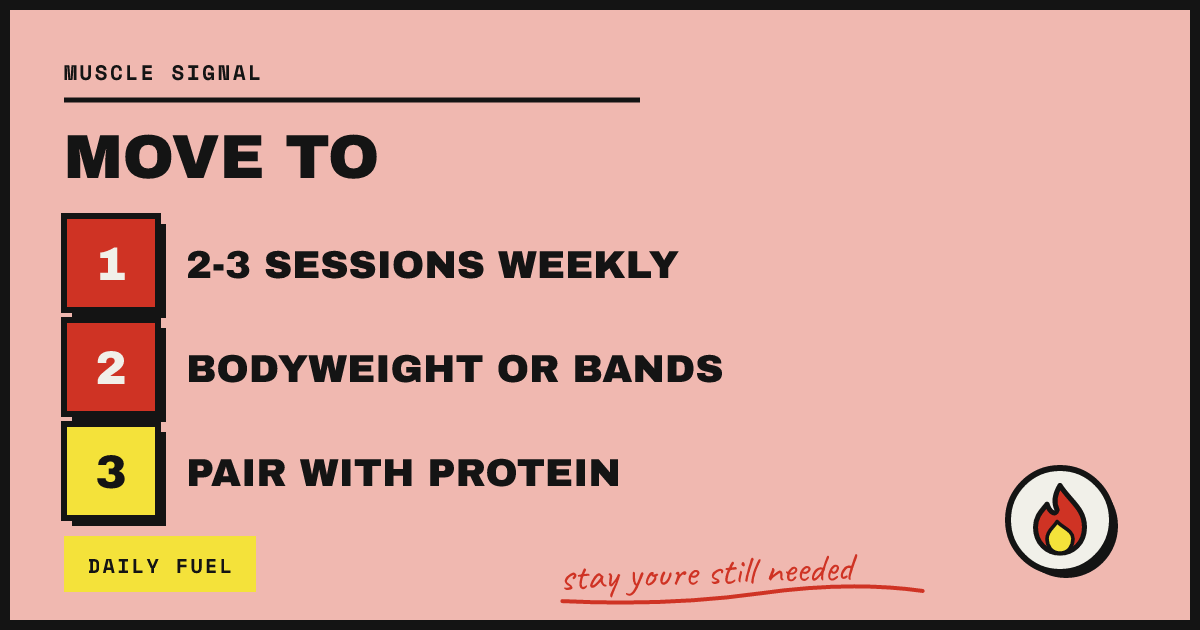
Protein alone isn't the whole answer; your muscles need a reason to keep the tissue you're feeding. Research pairing exercise with GLP-1 therapy backs this up clearly: the combined group lost the most weight and the smallest fraction of lean mass, and adding resistance exercise to a GLP-1 doubled the body-composition advantage, with 2–3 resistance sessions per week plus adequate protein being the most evidence-based muscle-preservation combination. You don't need a gym membership or hour-long sessions to see this benefit. Two or three short sessions a week with bodyweight moves, resistance bands, or light dumbbells send your muscles the same signal: stay, you're still needed.
Beyond the Prescription: Muscle-Smart Habits for Any Weight Journey
This muscle-protein-movement triangle isn't only a GLP-1 story. It's a useful framework for anyone managing appetite and weight through daily habits, herbal support, or a mix of both. Traditional Korean herbal wellness, or hanbang, has long treated the body as a balanced whole rather than a single number on a scale, pairing gentle botanical support with attention to what you eat and how you move. That same philosophy applies here: an herbal routine that supports appetite habits works best alongside, not instead of, real attention to protein and strength.
- Add a protein source to every meal, not just dinner
- Eat your protein portion first when your appetite is limited
- Move your body with resistance two to three times a week
- Keep a simple plant protein on hand for low-appetite days
- Check in with a healthcare provider before changing your routine, especially if you're on any medication
Frequently Asked Questions
Do I need to worry about muscle loss if I'm not on a GLP-1 medication?
Yes, to a smaller degree. Any significant calorie reduction or rapid weight loss can pull from muscle if protein and movement aren't prioritized, so the same habits that help GLP-1 users apply broadly to anyone managing their weight.
Can a plant-based protein really help if I'm eating less overall?
A concentrated plant protein can be an efficient way to hit your daily protein target without needing a large meal, which is useful on days when appetite is low. It's meant to complement whole-food protein sources, not replace them entirely.
Should I take a supplement instead of talking to my doctor about GLP-1 side effects?
No. Herbal and nutritional support like ours is designed to complement daily wellness habits, not to replace medical guidance. Always talk to your healthcare provider about any concerns related to a prescription medication, including muscle changes.