If you've told yourself a late dinner doesn't really count, new research says otherwise. A major 2026 analysis found that people who regularly eat after dinner or close to bedtime have meaningfully higher rates of two serious liver conditions, not just a higher risk of weight gain. It's the clearest signal yet that when you eat may matter almost as much as what you eat for long-term metabolic health.
What the New Research Actually Found
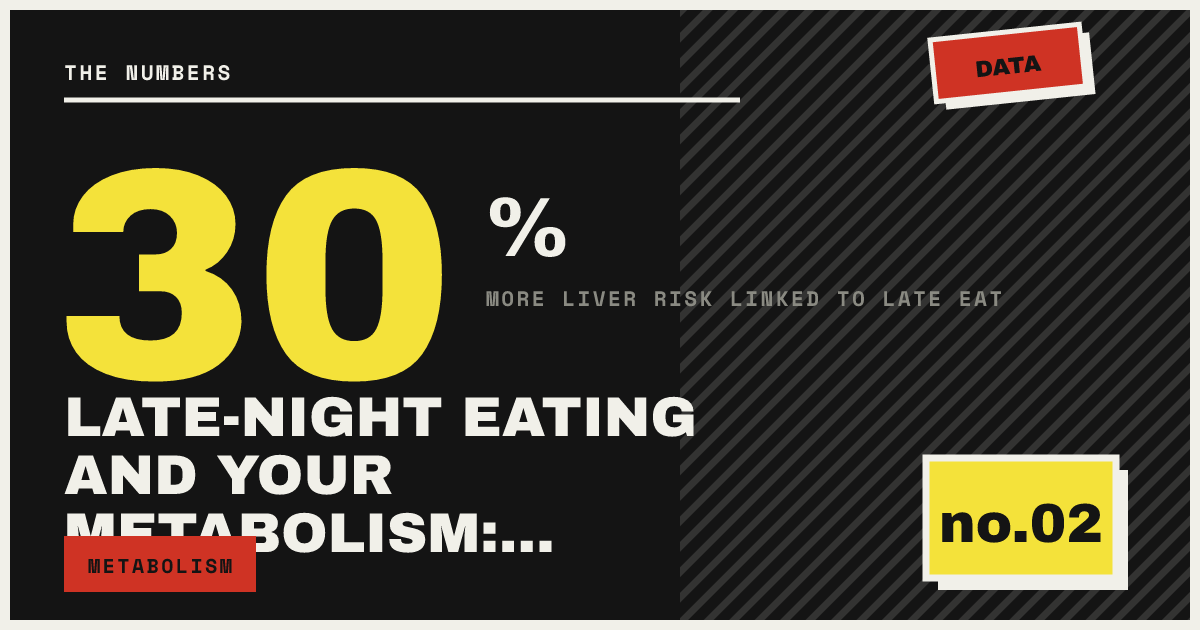
Researchers at Oregon Health & Science University pulled data from three large, preexisting nationwide data sets: the Nurses' Health Study, the Nurses' Health Study II and the Health Professionals Follow-up Study. What they found was striking: people who reported eating late at night showed a 20% to 30% increase in all forms of liver disease compared with those who didn't, specifically metabolic dysfunction-associated steatotic liver disease and cirrhosis.
This builds on, rather than replaces, what researchers already knew. Previous research had associated late-night snacking with heart disease and obesity, but this is one of the first studies to connect the habit to liver health specifically. As co-author Andrew McHill put it, "the timing of behaviors, whether it's sleep, eating or exercise, really matters."
Does Late-Night Eating Really Slow Your Metabolism?
Yes — the same meal appears to be processed less efficiently when eaten late. A 2026 chronotype study found that women with an evening chronotype were more likely to eat late at night and had higher body fat, poorer blood sugar regulation, and less favorable lipid profiles than their early-bird counterparts, even when total daily calories were similar.
Earlier hormone research helps explain why. When meal timing shifted later into the day and night, scientists observed that levels of leptin, which signals that you've had enough to eat, dropped and remained suppressed, while ghrelin, the hunger hormone, became elevated. At the same time, metabolic tests showed that when meals skewed later, participants burned calories at a slower rate. Your body isn't just reacting to a snack — it's adjusting its entire overnight chemistry around it.
The Sleep Domino Effect
Late eating doesn't just affect digestion — it affects the sleep that follows it, which then feeds back into tomorrow's hunger and stress hormones. A controlled sleep-lab study found that dinner eaten just one hour before bedtime resulted in significantly shorter total sleep time, reduced sleep efficiency, and more wake-ups during the night compared with an earlier dinner.
That matters because fragmented, shortened sleep is one of the most reliable triggers of next-day cravings and a sluggish-feeling metabolism. It's a loop: a late dinner disrupts sleep, poor sleep nudges appetite hormones in the wrong direction, and a tired, hungrier body reaches for quick carbs the next evening — often late again.
The Walk That Resets Your Blood Sugar
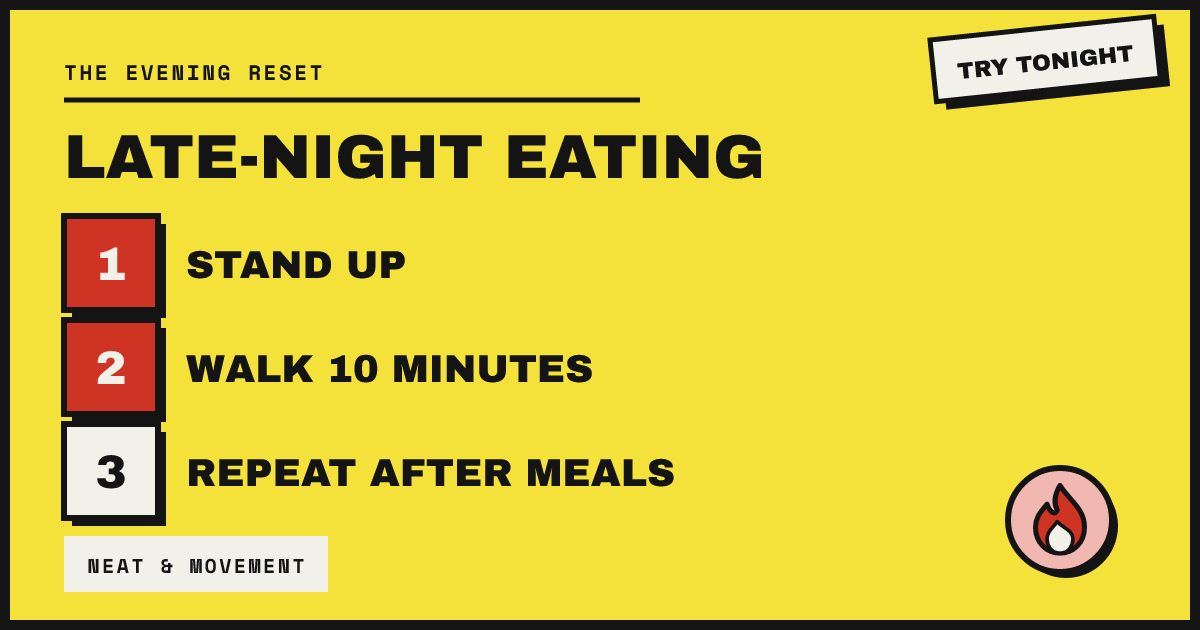
If dinner does run later some nights, movement afterward is one of the best-studied counter-moves. The mechanism is simple: skeletal muscle contractions stimulate glucose uptake independently of insulin, lowering the blood sugar spikes that would otherwise trigger fat-storage signals.
- A widely cited trial found that three 15-minute walks after meals reduced 3-hour post-meal glucose by 41% more than a single 45-minute walk of equal total length.
- You don't need a long session — even 2 to 5 minutes of walking after eating produced measurable glucose benefits in research.
A short loop around the block after dinner is a low-effort, high-leverage habit, especially on nights when your meal lands later than you'd planned.
How to Actually Shift Your Evening Habits
You don't have to overhaul your whole schedule overnight. Small, repeatable shifts tend to stick better than a strict cutoff you'll abandon by Thursday.
- Set a soft "kitchen close" time — aim for 2 to 3 hours before bed, even if it's imperfect most nights.
- Lead dinner with protein and fiber so you're less likely to go hunting for a carb-heavy snack at 10pm.
- Take the post-dinner walk instead of the post-dinner scroll — even a short one counts.
- Have a plan for the craving, not just the clock. If late-night carb urges are your real trigger, a targeted herbal formula like Cheating On is designed to support how your body handles carb-heavy moments, so the habit change doesn't rest on willpower alone.
Frequently Asked Questions
Does eating late at night actually cause weight gain?
Research consistently links late-night eating to higher body fat and poorer blood sugar and lipid markers, likely through disrupted hormone signaling and reduced metabolic efficiency at night. It's an association seen across multiple large studies, not a single definitive cause-and-effect proof, but the pattern is strong and consistent.
How late is "too late" to eat?
Most of the research defines late-night eating as meals eaten after dinner or close to bedtime, rather than one fixed clock time. A practical guideline used in sleep and metabolism studies is finishing eating at least 2 to 3 hours before you go to sleep.
Does a short walk after dinner really make a difference?
Yes — even brief walks of 10 to 15 minutes after a meal have been shown to blunt post-meal blood sugar spikes meaningfully more than staying seated. It's one of the simplest, most evidence-backed habits you can add tonight without changing what you eat.