Eating late at night does not automatically turn calories into body fat, but new circadian research shows that timing still shapes how your body handles those calories. Late meals can nudge nighttime cortisol up, blunt the hormone that signals fullness, and tilt metabolism toward storage rather than burn. For most people, the real issue isn't the clock on the wall — it's what you eat, how much, and how consistently you do it before bed.
Key takeaways
- A 2026 study tracking thousands of nights of food and sleep data found that a heavier evening meal was linked to a slightly higher overnight heart rate.
- Research from Harvard Medical School found that late eating lowers the satiety hormone leptin and is tied to increased body fat and impaired weight-loss success over time.
- A 2026 randomized trial found that eating 40 grams of protein or carbohydrate 30 minutes before bed did not disrupt sleep, resting heart rate, or heart rate variability in young adult women.
Does Eating Late at Night Cause Weight Gain?
Not by itself — but the pattern around late eating often does. Previous research has shown that late eating is associated with increased obesity risk, increased body fat, and impaired weight loss success. Scientists have been trying to figure out why for years, since a calorie eaten at 9 p.m. isn't chemically different from one eaten at noon.
What seems to matter more is what tends to ride along with late eating: bigger portions, less fiber, more alcohol, and a shorter runway before sleep. Newer circadian studies are now isolating the timing effect on its own, and the results are nuanced rather than alarming — small, measurable shifts rather than dramatic metabolic damage.
What the Newest Research Actually Shows
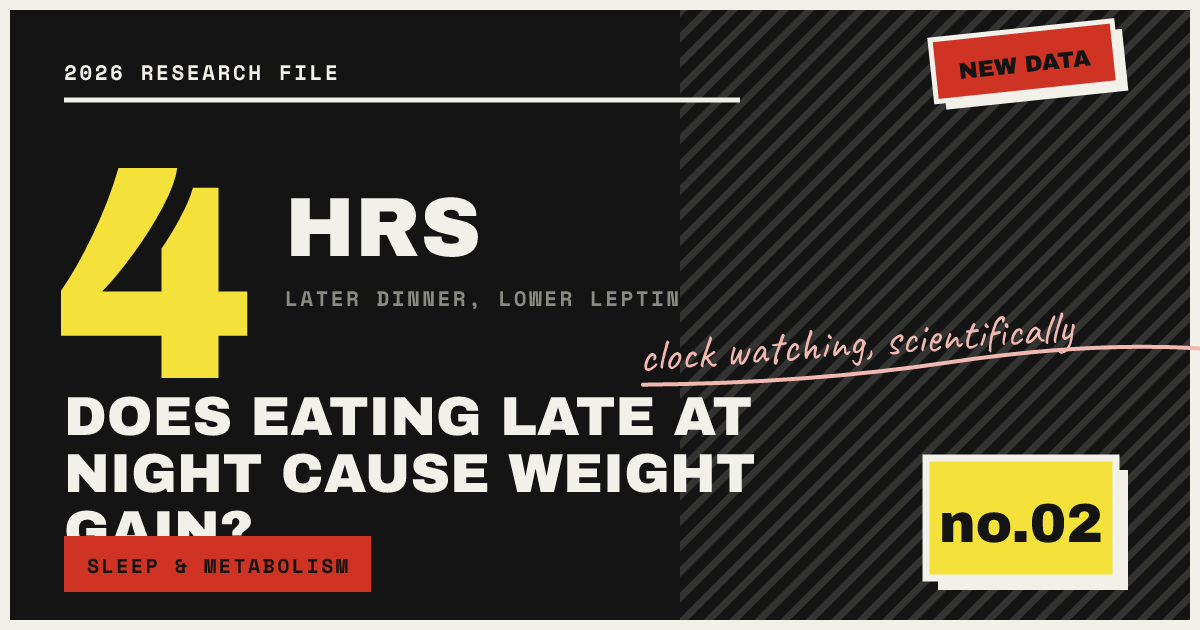
A large 2026 study built on thousands of nights of real-world food and sleep tracking found that more fiber was linked with slightly more deep and REM sleep and a lower night heart rate, while a heavier evening meal came with 7.7 minutes more sleep but a 0.73 bpm higher night heart rate, with effects described as small and observational. In other words, a late, heavy dinner isn't catastrophic — it's a measurable nudge, not a verdict.
Cortisol tells a similar story. A late dinner didn't change sleep stages, but it did raise cortisol, with the metabolic effects strongest in people who usually went to bed early. Earlier lab work backs this up: in controlled studies, levels of leptin, the hormone that signals satiety, were decreased across 24 hours in late-eating conditions compared with early eating. Less leptin can mean more hunger the next day — a quiet feedback loop that makes late eating self-reinforcing.
Why Nighttime Cravings Feel So Hard to Resist
Part of this is biology. Cortisol and the hunger hormone ghrelin both tend to rise with stress, and eating at night has been shown to raise overnight cortisol levels, including in people working irregular schedules. Stress and fatigue in the evening can make cravings louder, even when your body doesn't actually need more fuel.
Traditional Korean herbal medicine, or hanbang, has long framed this pattern differently: persistent nighttime hunger is often read as a sign that digestion wasn't doing its job earlier in the day, leaving the body to ask for fuel again once things quiet down at night. Whether you think of it as a hormone cascade or a digestive imbalance, the practical takeaway is the same — a well-fed, well-digested day tends to mean a quieter kitchen at 11 p.m.
Does Eating Protein Before Bed Disrupt Sleep?
No, according to the newest controlled research. A 2026 randomized trial found that 40 grams of protein or carbohydrate eaten 30 minutes before bed did not disrupt sleep, resting heart rate, or heart rate variability in young female athletes. That's reassuring if your version of a late meal is a protein shake or a bowl of yogurt rather than a second dinner.
This matters because the instinct to skip all evening food can backfire. A small, protein-forward bite before bed may help you avoid the 2 a.m. fridge raid that actually drives overconsumption — the behavior most consistently linked to weight gain, regardless of the clock.
Habits That Actually Move the Needle
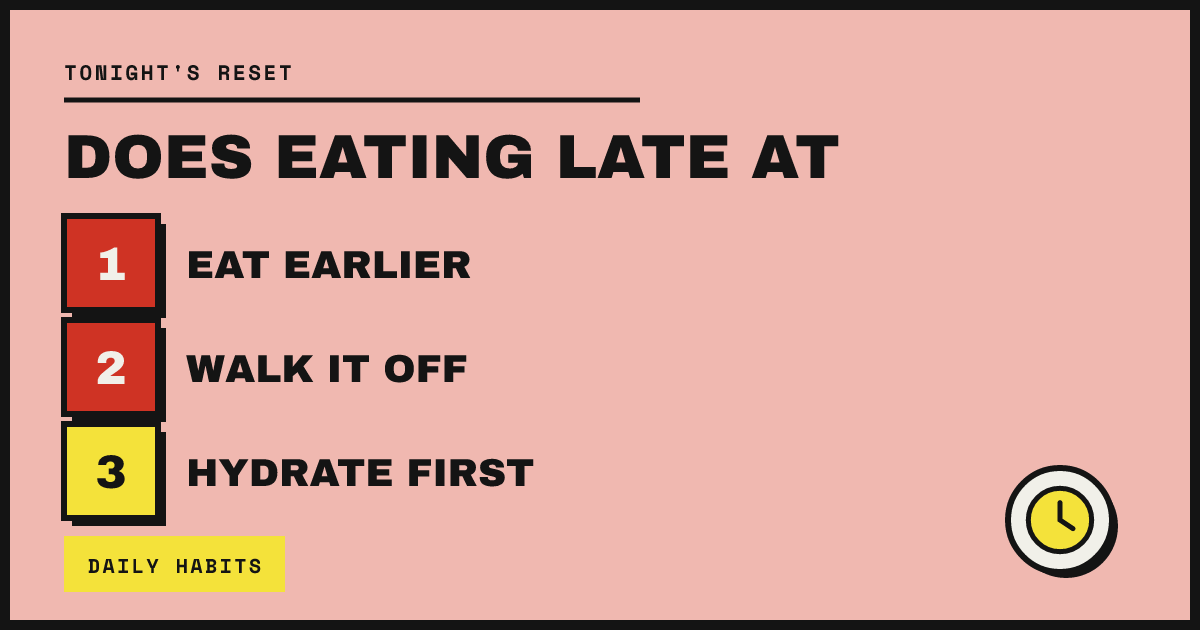
If timing alone isn't the villain, where should you actually put your effort? A few habits show up again and again in the research:
- Pick a consistent "kitchen closed" time and stick to it most nights, rather than chasing a strict hour like 6 or 8 p.m.
- Build dinner around protein and fiber, which blunt the blood-sugar swings that fuel late cravings.
- Take a short walk after your last meal — even 10 minutes of movement supports glucose handling.
- Drink water before deciding you're hungry; evening thirst is easy to mistake for appetite.
- Go easy on alcohol close to bedtime, since it fragments sleep and tends to loosen food choices.
Consistency matters more than perfection here. Pairing an earlier, steadier eating rhythm with daily metabolic support — like VYNEHERB's Slim Effector — can make it easier to focus on habits instead of clock-watching.
Frequently Asked Questions
What time should I stop eating at night?
There's no universal cutoff that applies to everyone. Many researchers suggest finishing your last real meal two to three hours before bed, but consistency and food quality matter more than hitting an exact hour.
Does eating late ruin your metabolism?
One late meal won't undo your metabolism. The research links repeated late, heavy eating combined with poor sleep to gradual metabolic strain — it's the pattern over weeks and months that counts, not a single night.
Is a late-night snack ever okay?
Yes. A small, protein- or fiber-forward snack, like plain yogurt or a handful of nuts, is unlikely to cause harm and may even help you sleep through the night instead of waking up hungry. The occasional snack isn't the problem — the nightly pattern is.