"Cortisol face" is not a medical diagnosis, and for almost everyone who thinks they have it, the puffiness isn't actually coming from a stress-hormone spike. It's coming from sleep debt, sodium, alcohol, allergies, or simple fluid shifts overnight. Stress can still show up on your skin over time, just not through the dramatic before-and-after "de-bloat" transformation TikTok promises. Here's what dermatologists and new research actually say, and how diet, herbs, and small daily habits can support a calmer, less puffy look.
What Is 'Cortisol Face,' Really?
The term exploded across social video over the past year, used to describe puffy cheeks, a softer jawline, and under-eye bags that creators blame entirely on chronic stress. The trend gained additional cultural traction after Amy Schumer publicly described being diagnosed with exogenous Cushing syndrome after steroid exposure, though her case was real but not representative of the average person interpreting facial swelling through TikTok.
Dermatologists have been pushing back for months. One put it plainly: there's no medically recognized diagnosis called 'cortisol face,' and while cortisol has become a convenient buzzword online, facial puffiness is usually multifactorial and often far less dramatic than social media makes it seem.
Does Stress Actually Make Your Face Puffy?
Yes, but indirectly, and rarely through a quick cortisol surge. Facial puffiness is a symptom with many possible causes, and stress may play a role through sleep disruption, eating patterns, inflammation, and hormone signaling. A dermatologist writing this week broke it down further: cortisol can drive facial puffiness when it's truly high, since sustained, significantly elevated cortisol causes fluid retention and can redistribute fat toward the face, a documented medical phenomenon. But that same source notes the more common everyday story: most 'cortisol face' isn't from cortisol, and everyday facial puffiness is far more often about sleep, salt intake, alcohol, allergies, sinus congestion, or simply your natural face shape.
Where stress genuinely earns some blame is skin quality over time. Stress worsens skin conditions, since elevated cortisol increases oil production and inflammation, which can flare acne, rosacea, eczema, and psoriasis. That's a slower, cumulative story, not an overnight face transformation.
The Real Causes Behind Your Puffy Mornings
Before blaming your stress hormones, it's worth looking at the more boring, more fixable list. The puffy, rounded look TikTok attributes to stress hormones is almost always something else: water retention, sodium intake, sleep debt, or simple facial anatomy. Clinical sources agree: most facial puffiness is more likely related to sleep, diet, sodium intake, alcohol, allergies, fluid retention, medications, or normal anatomic variation than sustained hypercortisolism.
- Salty dinners or restaurant meals the night before
- A glass of wine or two with dehydrating effects
- Short or broken sleep, which lets fluid pool around the thin skin under the eyes
- Seasonal allergies or sinus congestion
- Hormonal shifts tied to your cycle
The Hanbang View: Puffiness as a Water Problem, Not Just a Stress Problem

Traditional Korean herbal medicine, or hanbang, has a long-standing way of thinking about this kind of puffiness that doesn't center on cortisol at all. It frames swelling and heaviness in the face as a sign that fluid isn't moving through the body the way it should, often tied to digestion, circulation, and the foods and drinks that came before it. Rather than treating puffiness as purely cosmetic, this tradition pairs warming teas, lighter evening meals, and herbs believed to support healthy fluid movement with simple daily rhythm, hydrate earlier in the day, eat lighter at night, and let the body do its own overnight reset.
This lens lines up surprisingly well with where modern beauty-from-within research is heading. The sweet spot for beauty-from-within innovation is products that are evidence-led, affordable, convenient and relevant to consumers' life stages, with benefits tied to sleep, stress, energy, gut health or healthy aging. A puffy face, in other words, is a whole-body signal, not a spot to fix with a single serum.
Habits and Herbs That Support De-Puffing From Within
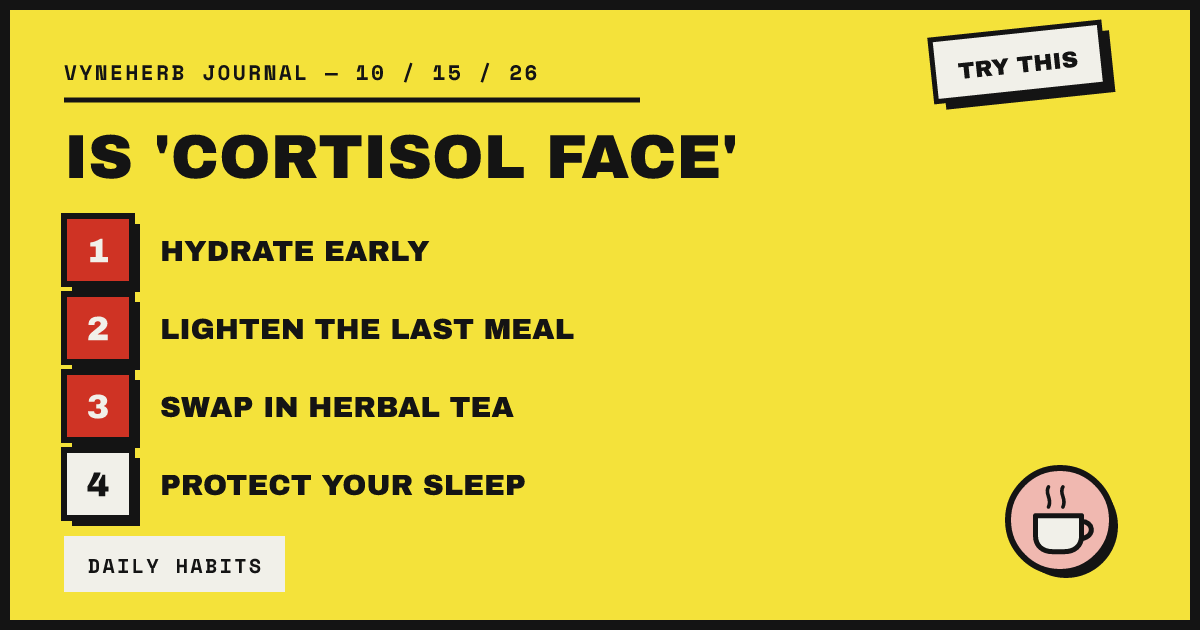
You can't "detox" cortisol out of your face in a morning, but you can stack small habits that genuinely support less puffiness and calmer skin over time. Start with the fixable basics: cutting back on late-night sodium, limiting alcohol, and protecting a consistent sleep window. Beyond that, there's a growing body of research on plant-based adaptogens and their role in the body's stress response. Adaptogenic herbal extracts act primarily by modulating the hypothalamic-pituitary-adrenal axis, helping regulate cortisol, a key hormone that exacerbates inflammatory skin conditions under chronic stress, with ashwagandha shown to lower cortisol levels and reduce systemic inflammation.
One easy swap: if your afternoon routine involves a salty snack or a second sugary coffee, trade it for a warm cup of herbal tea instead. Our Yeori Tea was built around this exact kind of habit shift, a practitioner-reviewed herbal blend designed to support gentle fluid balance and easier digestion as part of your daily rhythm, not a quick-fix de-puffing hack.
How Long Does It Take to See Less Puffiness?
Most people notice less morning puffiness within a few days of cutting back on sodium and alcohol and getting steadier sleep, since fluid shifts resolve quickly once those triggers are removed. Herbal and habit-based support tends to work on a slower timeline, usually two to four weeks of consistency before the difference feels reliable rather than occasional. If puffiness is persistent, one-sided, or comes with other symptoms like unexplained weight gain or fatigue, it's worth checking in with a healthcare provider rather than assuming it's stress.
Frequently Asked Questions
Is cortisol face a real medical condition?
Not as its own diagnosis. True cortisol-driven facial change is linked to Cushing syndrome, a rare endocrine condition, while everyday puffiness usually comes from sleep, salt, alcohol, or allergies.
Can herbal teas actually help with facial puffiness?
Herbal teas won't erase puffiness overnight, but swapping salty or sugary habits for a warming herbal tea can support hydration and gentle fluid balance as part of a broader routine. Think of it as supporting the body's own rhythm, not a standalone fix.
When should I see a doctor about facial swelling?
If puffiness is sudden, one-sided, painful, or paired with symptoms like easy bruising, unexplained weight changes, or persistent fatigue, see a healthcare provider to rule out an underlying condition.