Early research suggests Korean red ginseng may support healthy metabolism and gut balance, though it is not a substitute for prescription GLP-1 medications. A wave of new studies out of Korea in 2025 and 2026 are examining ginsenosides — ginseng's signature plant compounds — and how they interact with the gut microbiome, energy metabolism, and appetite signals. For anyone building a wellness routine, that makes ginseng one of the more actively-researched herbs in the modern hanbang revival. Here is what the newest research actually shows, and how to use ginseng sensibly as part of a daily habit, not a shortcut.
What New Research Reveals About Ginseng and Metabolism

A study published in the Journal of Ginseng Research in January 2026 looked at how Korean red ginseng extract interacts with the gut microbiota-liver axis in high-fat-diet animal models, tracking shifts in lipid metabolism markers. Separately, a late-2025 study out of a Seoul research lab examined gintonin, a compound recovered from red ginseng processing byproduct, tracking its effects on energy metabolism, thermogenic gene activity, and food intake in mice over 25 weeks of feeding — one of the longer ginseng studies to date.
None of this means ginseng is a cure or a drug replacement. But it adds to a growing body of evidence that this centuries-old root does something measurable in the body, not just in folklore, but in the lab.
How Does Korean Red Ginseng Support a Healthy Gut?

Emerging research suggests Korean red ginseng may shift the balance of gut bacteria in ways connected to healthy metabolism. In one animal study, researchers analyzed stool samples after ginseng extract feeding and found changes in gut bacterial populations alongside reductions in diet-induced weight gain and food intake, pointing to the microbiome as a possible piece of ginseng's mechanism.
A separate review compiled roughly two decades of human clinical trials on Panax ginseng, examining outcomes like body composition, insulin sensitivity, and lipid markers across 25 published studies. The pattern across this research is consistent: modest, measurable shifts, not dramatic transformations — which is exactly what you'd expect from a food-based botanical rather than a pharmaceutical.
The Hanbang Tradition Behind a 500-Year-Old Root

Long before ginsenosides had a name, Korean red ginseng held a central place in hanbang, the traditional herbal medicine system that has shaped Korean wellness practices for centuries. Root was steamed and dried specifically to concentrate its compounds, a process still used today, and it was traded as a prized tonic believed to support stamina, digestion, and long-term vitality.
That heritage is part of why ginseng shows up so often in modern K-wellness formulas. It is not a trend chasing virality; it is a root with a longer track record than almost anything else in the herbal aisle.
Can Ginseng Replace a GLP-1 Drug?
No — Korean red ginseng works differently from prescription GLP-1 medications and should not be viewed as a substitute for them. Drugs like semaglutide and tirzepatide directly mimic a specific gut hormone at doses calibrated by a physician, producing strong, closely monitored appetite suppression.
Ginseng's research base points to a gentler, more general kind of metabolic and gut support — the kind that fits into a daily routine rather than a medical protocol. If you are currently on a GLP-1 medication or considering one, talk to your prescribing provider before adding any new herbal supplement, since interactions and individual health factors matter more than any single ingredient.
How to Build Ginseng Into a Daily Ritual
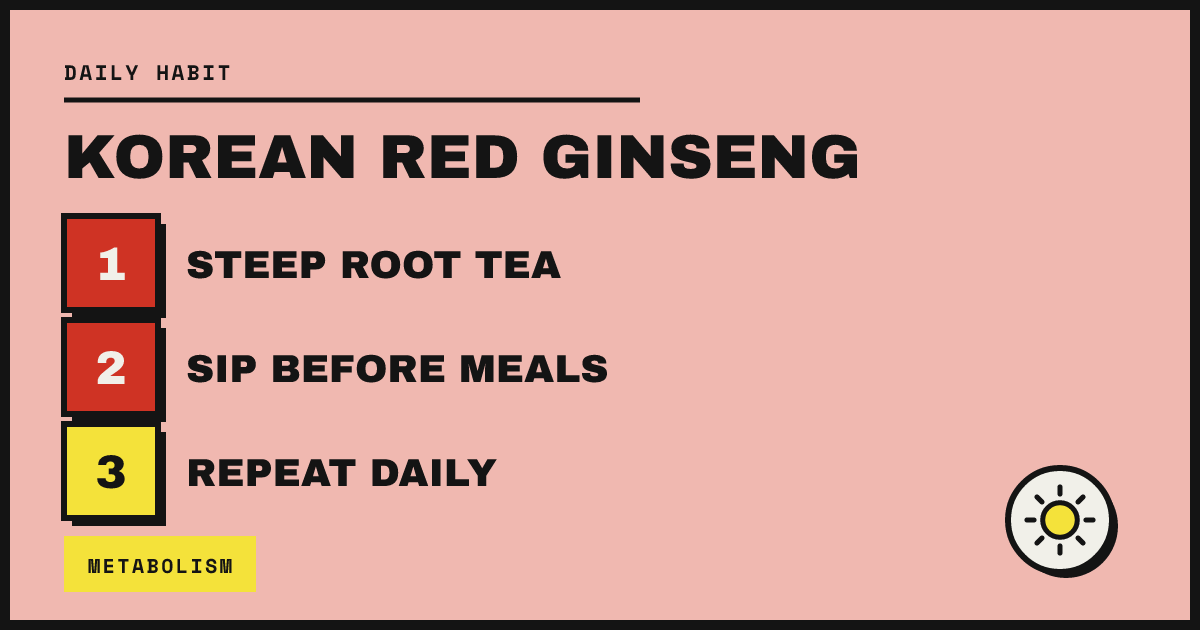
Traditionally, ginseng was sipped as a warm root tea first thing in the morning, on an empty stomach, as part of a steady daily rhythm rather than an occasional fix. That timing still makes sense: a consistent morning habit is easier to stick with than a supplement you remember only sometimes.
- Start small and consistent — one cup or one serving at roughly the same time each day.
- Pair it with breakfast or your first meal, since ginseng is traditionally taken alongside food.
- Give it weeks, not days — herbal support builds gradually, unlike a fast-acting drug.
If mornings are rushed, a modern option like Burning On, a morning metabolism drink stick built for a quick daily ritual, can make it easier to keep an herb-forward habit going without extra steps.
What to Know Before You Start
Ginseng is generally well tolerated, but it is not risk-free for everyone. It can interact with blood thinners and certain diabetes medications, and some people report mild jitteriness if they are sensitive to its stimulating effects.
Pregnant or nursing individuals, and anyone on prescription medication, should check with a healthcare provider before starting ginseng or any new herbal supplement. Look for practitioner-reviewed formulas with transparent sourcing, since ginseng quality and ginsenoside concentration vary widely between products.
Frequently Asked Questions
Does Korean red ginseng help with weight loss?
Animal and some human studies suggest ginseng may support healthy metabolism, gut balance, and lipid markers, but it is not a proven weight-loss treatment. It's best approached as a supportive daily habit alongside diet and lifestyle, not a standalone solution.
How long does it take to notice ginseng's effects?
Most research uses consistent daily use over several weeks to months before measuring changes. As with most herbal support, patience and consistency matter more than any single dose.
Can I take ginseng alongside a GLP-1 medication?
You should not start or adjust any supplement alongside a GLP-1 medication without first talking to your prescribing provider. They can flag any interaction risks based on your specific medication and health history.