Fibermaxxing is the 2026 wellness trend built around pushing daily fiber intake well past the standard recommendation — often to 40 or 50 grams a day — to feel fuller, support digestion, and curb mindless snacking. The short answer: fiber genuinely can help you feel satisfied longer, because it slows digestion and triggers your gut's own fullness signals. But ramping up too fast is exactly why so many fibermaxxers end up bloated, gassy, and quitting by week two.
What Is Fibermaxxing, Exactly?
Fibermaxxing is a dietary approach where people intentionally build every meal around fiber-dense foods — oats, legumes, chia, berries, leafy greens — to hit well above the USDA's standard daily targets. Fiber-maxxing is the 2026 TikTok wellness trend where creators aim to hit 40–50g of fiber daily for gut health, satiety, and longevity.
The appeal makes sense. The average North American eats far less fiber than the roughly 38 grams a day considered optimal for adults. Closing that gap is a real, achievable win for most people's plates.
Does Fiber Really Make You Feel Fuller?
Yes — fiber is one of the few truly well-documented appetite tools we have. Soluble fiber forms a gel in your gut that slows how fast food (and sugar) moves through your system, which stretches out the feeling of fullness between meals. Some fiber types also ferment in the colon to produce short-chain fatty acids that prompt your gut to release its own satiety signals.
That's worth noting given how often fiber gets mentioned in the same breath as GLP-1 drugs lately. Gut health and GLP-1s are trending together, and manufacturers are focusing on fiber because it can naturally increase the GLP-1 hormone in the body. Fiber nudging your own gut hormones is a very different thing from a prescription injection or pill, and it won't replicate drug-level effects — but it's a legitimate, food-first lever for everyday fullness.
The Bloat Backlash: Why Jumping to 50g Backfires

Here's the part most TikTok videos skip. Anyone who increases their fiber intake by more than 5 grams per day at once risks bloating, cramps, and digestive stress, because the gut needs weeks to adapt. Going from a typical 15 grams straight to 50 grams overnight is a shock, not a shortcut.
Experts echo the same caution. Clinicians report seeing mixed results with extremely high fiber intake over 50 grams, leading to bloating and discomfort without clear added benefit. More fiber isn't automatically better fiber — your gut bacteria need time to build up the capacity to ferment it comfortably.
How to Fibermax Without the Bloat
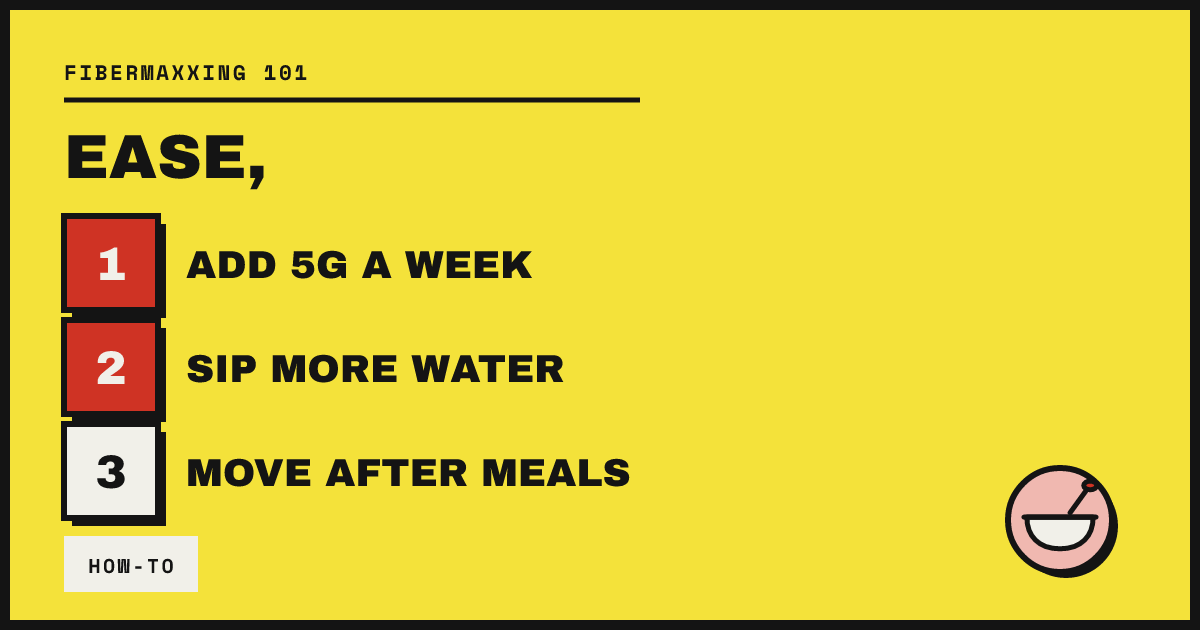
The trend itself isn't the problem — the pace usually is. A gentler approach lets you capture the fullness and digestion benefits without the discomfort.
- Add roughly 5 grams of fiber per week, not per day, so your gut microbiome has time to adjust.
- Increase water intake alongside fiber — dry fiber without enough fluid is a common bloating trigger.
- Spread fiber across meals instead of front-loading it into one giant bowl of oats and chia.
- Favor fiber diversity (beans, fruit, oats, vegetables) over a single mega-source.
Where Korean Herbal Tradition Already Got This Right

Long before "fibermaxxing" had a name, Korean hanbang cooking was quietly doing a version of it. Fiber-dense roots like burdock and lotus root have shown up in traditional Korean side dishes and teas for generations, prized for keeping digestion moving and meals satisfying without heaviness.
That slow, food-based approach to fullness — building habits gradually instead of chasing an overnight fix — is the same philosophy behind 500 years of Korean herbal wisdom: support the body's own signals rather than override them.
Can Herbal Support Make Fullness Easier to Reach?
If your goal in fibermaxxing is really about taming between-meal cravings and feeling satisfied with less, fiber is only one lever. Herbal botanicals traditionally used to support appetite habits can work alongside a gradual fiber increase, especially on days when old snacking patterns creep back in. VYNEHERB's Appetite Suppressant is formulated with practitioner-reviewed herbal ingredients designed to support natural fullness cues as part of a daily routine — a gentler complement to a fiber-forward plate, not a replacement for it.
As always, talk with a healthcare provider before making major changes to your diet or fiber intake, especially if you take medication or have a digestive condition.
Frequently Asked Questions
How much fiber should I actually eat per day?
Most health guidelines recommend roughly 25 grams a day for women and 38 grams for men. Fibermaxxing pushes well beyond that, which isn't necessary for most people and can cause discomfort if done too quickly.
Is fibermaxxing safe for everyone?
Not necessarily. People with digestive conditions like IBS, Crohn's disease, or a history of bowel surgery should talk to a doctor before significantly increasing fiber, since a sudden jump can worsen symptoms.
Does fiber work like a GLP-1 drug?
No. Fiber can support your body's own natural satiety signals, but it does not work the same way or produce the same results as prescription GLP-1 medications, and it shouldn't be treated as a substitute for medical treatment.