Yes, salty food really can make you bloat. Sodium pulls extra water into your tissues and, according to newer research, may even shift gut bacteria in a way that produces more gas. The good news: for most people, salt bloat is temporary and starts easing within a day or two of cutting back. With the FDA just finalizing a major sodium rule this October, the science of 'why am I so puffy after that meal' is suddenly very current.
Does Salt Really Make You Bloated?
Yes. Sodium is an essential mineral, but your body works hard to keep it diluted to a precise concentration in the blood. When you eat a high-sodium meal, your kidneys respond by holding on to more water so that ratio stays balanced, and that extra fluid shows up as puffiness, a tight waistband, or a heavier number on the scale the next morning.
This is different from the gassy, distended feeling of digestive bloating, though the two often happen together after a salty, rich meal. One is fluid sitting in your tissues; the other is gas building up in your gut. Salt, it turns out, can contribute to both.
Why Sodium Pulls Water Into Your Belly
Think of sodium as a magnet for water. Your body defends a precise ratio of sodium to water in your blood, so when a salty meal loads you with sodium, your kidneys hold on to water to dilute it back to normal. That retained fluid doesn't stay neatly in your bloodstream. It spreads into the spaces between cells, which is why rings feel tighter, ankles look puffier, and your midsection feels full before you've eaten much at all.
Restaurant meals, takeout, and packaged snacks are the usual culprits, since they tend to carry far more sodium per bite than home cooking. A single indulgent dinner is often enough to notice it by the next morning.
The FDA Just Changed the Sodium Rules — Here's Why That Matters
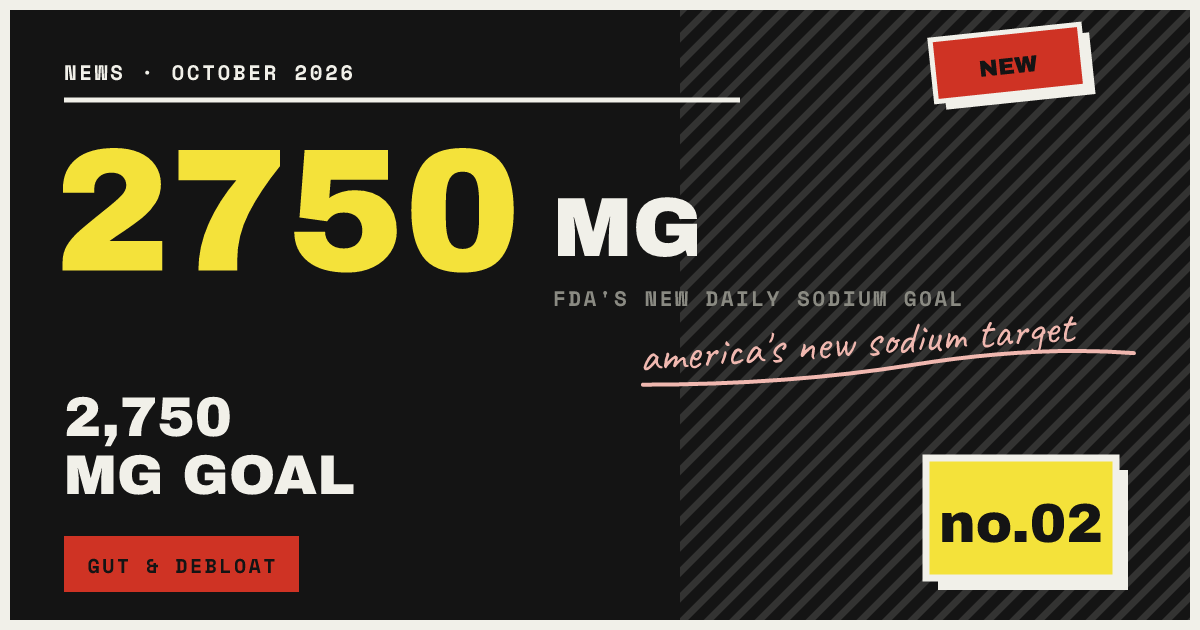
This topic isn't just a personal annoyance — it's now federal policy. On October 13, 2026, the FDA finalized a rule allowing food makers to use salt substitutes across 139 federal food standards, part of the agency's push to cut the U.S. average sodium intake from more than 3,400 milligrams a day down to 2,750 milligrams. Starting December 14, cheese, bread, canned vegetables, and more will be allowed to legally swap in lower-sodium ingredients.
Why does this matter for your bloat? More than 70% of Americans' sodium intake comes from foods where sodium is added during manufacturing and commercial food prep — not the salt shaker on your table. In other words, the bloat you feel after a 'normal' day of eating out or grabbing packaged food isn't a personal failing; it's baked into how most American food is made.
It's Not Just Water — Sodium May Change Your Gut Bacteria Too
A widely cited Johns Hopkins analysis found that sodium's effect on bloating goes beyond fluid. Researchers found that a high-fiber diet increased the risk of bloating by about 41 percent compared to a low-fiber diet, and men were more susceptible to this effect than women. Separately, the same researchers found sodium itself played a role in bloating, independent of fiber.
Their working theory is intriguing: sodium intake may alter the gut microbiome in a way that changes bacterial sulfide production, which could help explain the gassy, uncomfortable feeling that shows up alongside straightforward water retention. Translation: a salty, high-fiber day — think a big salad with dressing plus a salty protein — may be a near-perfect recipe for feeling puffed up.
How Long Does Salt Bloat Last?
For most healthy people, salt-related bloating is short-lived. Symptoms usually improve within 24 to 72 hours if you cut back on salt, hydrate, move more, and eat potassium-rich foods. If puffiness, swelling, or digestive discomfort lingers well past that window, or comes with pain or significant changes in bowel habits, it's worth checking in with a healthcare provider rather than assuming it's diet alone.
Simple Ways to Debloat After a Salty Day
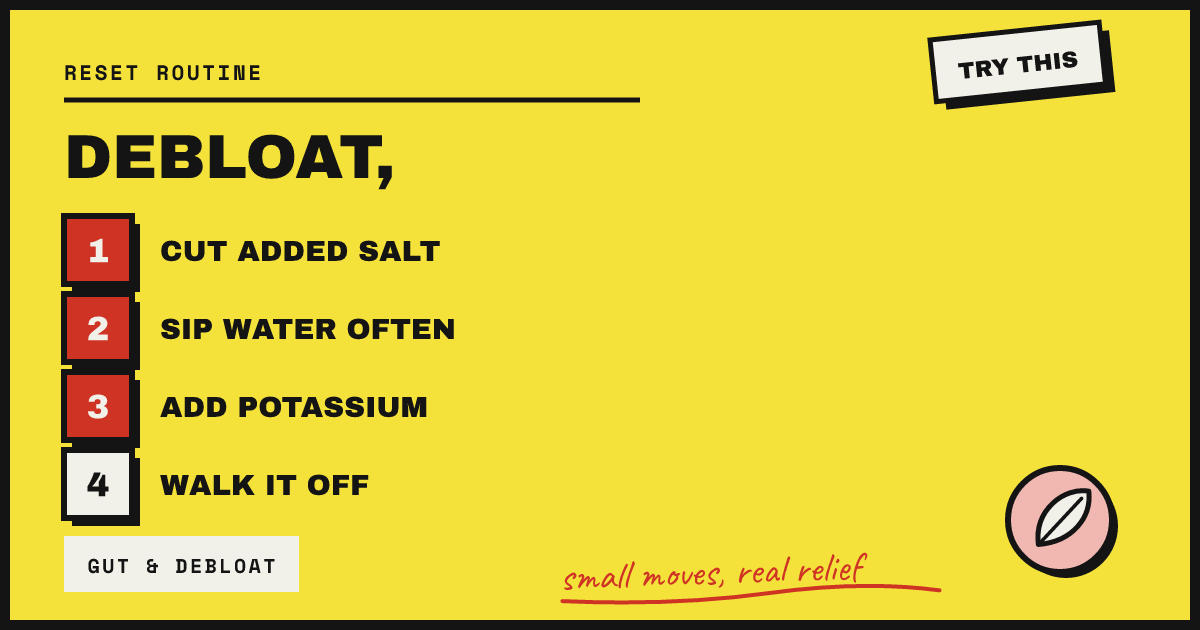
You can't undo a salty meal instantly, but a few habits speed up how quickly your body lets go of the extra fluid:
- Hydrate steadily through the day instead of chugging water all at once — consistent intake helps your kidneys flush excess sodium.
- Add potassium-rich foods like bananas, leafy greens, or sweet potatoes, which help your body rebalance its sodium-to-potassium ratio.
- Move your body. Light activity like a walk supports circulation and digestion, both of which help reduce that stuck, swollen feeling.
- Support your gut directly. A gut-balance formula like VYNEHERB's Belly Light is designed to work with your digestion after heavier, saltier meals, so the 'day-after' puffiness doesn't linger.
Frequently Asked Questions
Does drinking more water help with salt bloat, or make it worse?
Drinking water actually helps. It supports your kidneys in flushing out the excess sodium rather than letting it linger in your tissues, which is part of why steady hydration is a go-to fix for salt bloat.
Is sea salt or pink salt less bloating than table salt?
Not really. All forms of salt are mostly sodium chloride, and it's the sodium content — not the color or mineral trace amounts — that drives water retention and bloating.
Can a high-fiber diet make salt bloat worse?
It can for some people. Research has linked high-fiber eating with increased bloating risk on its own, and pairing a big fiber day with a high-sodium meal may compound the puffy, gassy feeling for some individuals.