If your stomach feels tight, gassy, or swollen since starting a GLP-1 medication, you are not imagining it. Yes, Ozempic and similar drugs can cause bloating, and the topic is getting louder as more Americans start these treatments now that self-pay prices have dropped. The good news is that it is usually explainable, often temporary, and there are real ways to feel more comfortable while your gut adjusts.
Key takeaways
- Ozempic can cause bloating because it slows stomach emptying, leading to feelings of fullness and gas.
- More than half of Ozempic users report having at least one digestive symptom at some point.
- Bloating typically peaks in weeks two to four and resolves significantly by week eight to twelve as the gut adapts.
Does Ozempic Cause Bloating?
Yes. Bloating can indeed be a side effect of Ozempic. When digestion slows down, food remains in the stomach longer, leading to feelings of fullness and discomfort, including bloating. People sometimes nickname the general discomfort "Ozempic belly," but it's worth knowing that this gas-and-transit bloating is a different thing from fat gain, which these drugs are not designed to cause.
This isn't a flaw unique to one brand. It is a side effect for Ozempic, Wegovy, Mounjaro, and Zepbound, due to their delayed stomach emptying mechanism. In other words, the same mechanism that quiets appetite is the one that can leave your stomach feeling fuller and tighter than usual.
Why GLP-1 Medications Slow Your Gut
GLP-1 drugs work in part by telling your stomach to empty more slowly. The delayed gastric emptying that suppresses hunger also fundamentally changes how your body processes food and handles gas. Food sits in the digestive tract longer than it used to, which gives gut bacteria more time to ferment what's left behind.
This fermentation generates hydrogen, methane, and carbon dioxide, which distend the intestinal walls and create the pressure sensation associated with bloating. Constipation often rides along with this slowdown, and the two can feed each other. Much of what people call "Ozempic bloating" is actually constipation-driven distension, since when stool backs up, gas backs up behind it, so aggressively treating constipation often relieves the bloating.
How Long Does Ozempic Bloating Last?
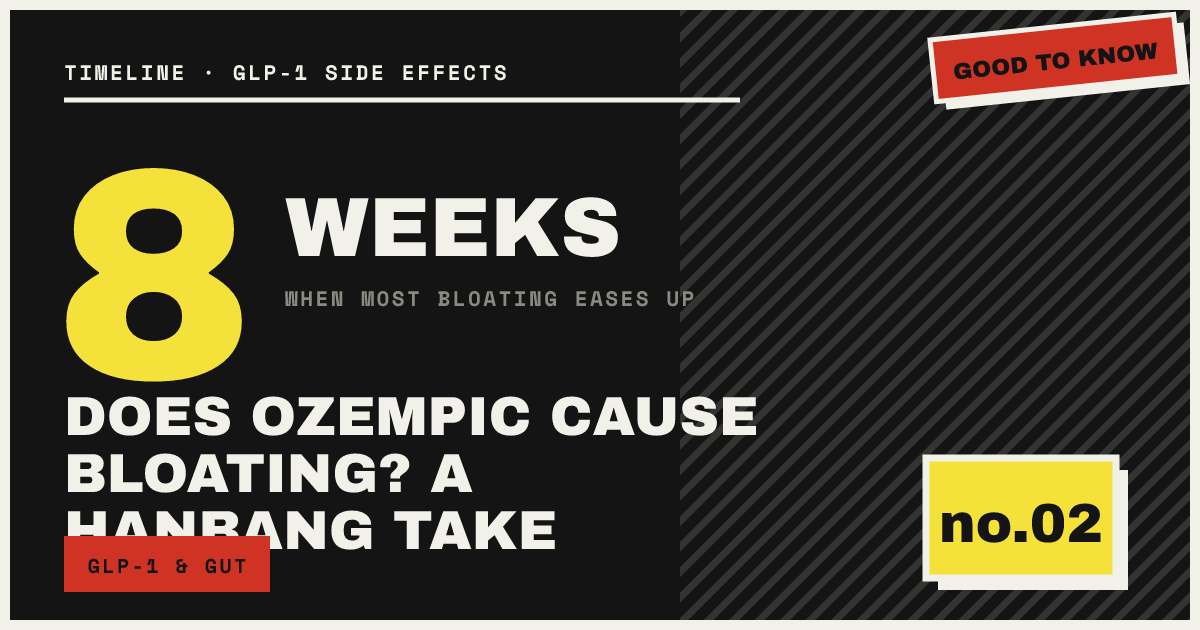
For most people, bloating is loudest in the first few weeks after starting a GLP-1 drug or stepping up a dose, then it quiets down. Bloating typically peaks in weeks two to four and resolves significantly by week eight to twelve as your gut adapts, though some people experience mild bloating indefinitely, which dietary adjustments and slower eating usually keep manageable.
Every dose increase can briefly restart that adjustment window, so a flare-up a few weeks after a titration step is common rather than alarming. If bloating is still intense well past that window, it's worth flagging to your prescriber rather than just living with it.
Simple Habits That Ease the Bloat
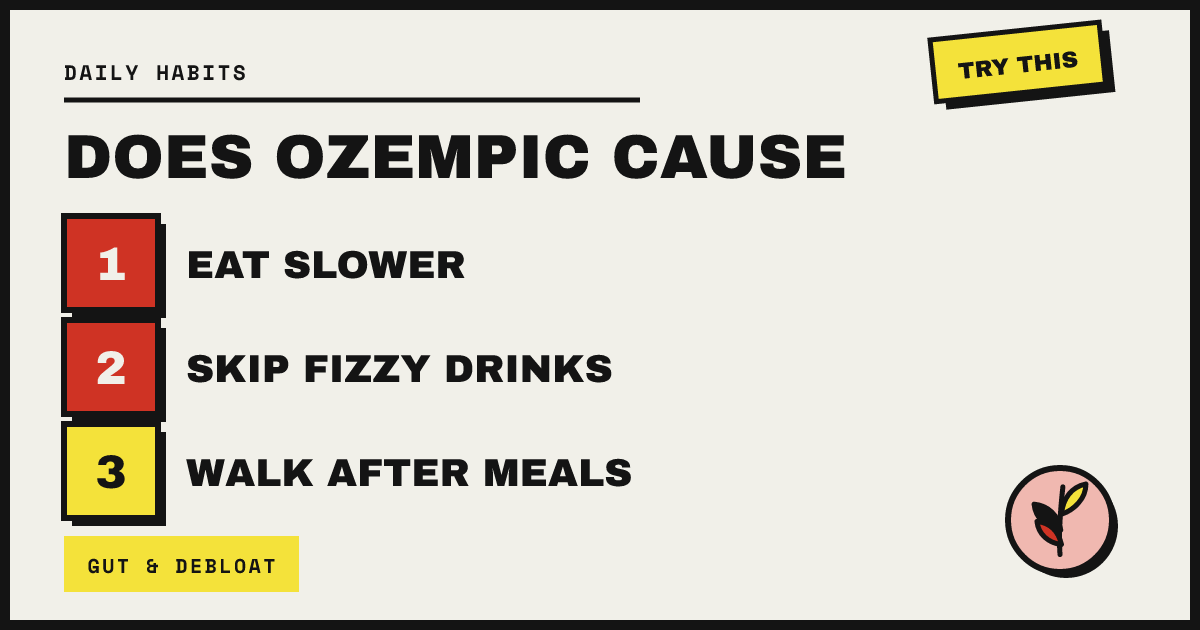
None of these habits require stopping or changing your prescription — they're small adjustments around it.
- Eat smaller, slower meals so there's less volume sitting in a stomach that's already emptying at a reduced pace.
- Reducing or completely avoiding carbonated beverages helps reduce bloating by producing less gas in your stomach.
- Sugar alcohols like sorbitol, xylitol, and erythritol, found in sugar-free gum and protein bars, are fermented by gut bacteria and can significantly increase gas and bloating.
- Walking after meals and staying active measurably speeds the clearance of intestinal gas and reduces bloating in people prone to it.
A Gentle Herbal Habit for Gut Balance
Korean herbal practice, or hanbang, has long treated a calm, well-moving gut as the foundation of overall comfort — long before anyone was talking about GLP-1 side effects. That same logic can be a useful add-on for anyone navigating a slower digestive rhythm today, whether or not a prescription is part of the picture.
This is a different lane from medication, not a substitute for it. A daily herbal routine like Belly Light is formulated to support gut balance and everyday de-bloating as part of a steady routine, not to replace or mimic what a prescription GLP-1 drug does. Think of it as support for comfort between meals, not a treatment for a side effect.
When to Check In With Your Doctor
Mild, come-and-go bloating is common and usually not a red flag on its own. But if bloating persists or becomes bothersome, it's essential to reach out to your healthcare provider for guidance.
Severe pain, persistent vomiting, signs of dehydration, or blood in the stool are reasons to call a provider promptly rather than waiting it out. And if you're ever considering adjusting your dose or timeline because of side effects, that's a conversation to have with the prescriber who's managing your treatment, not a decision to make solo.
Frequently Asked Questions
Is bloating a sign Ozempic is working?
No. Bloating is a side effect of slower digestion, not a marker of how much progress you're making. Many people see steady appetite changes with little to no bloating, and others feel bloated without it reflecting anything about effectiveness.
Does bloating mean I should stop taking Ozempic?
Not on your own. Bloating is usually temporary and tends to ease as your body adjusts or as your dose stabilizes. Any decision about pausing or stopping a prescription medication should go through your healthcare provider.
Can herbal routines really help with GLP-1-related bloating?
They can be a gentle complement to the basics like smaller meals, hydration, and movement. Traditional Korean herbal blends are generally used for everyday gut comfort and de-bloating support, not as a fix for a medication's mechanism, so they work best alongside your normal habits rather than in place of them.