GLP-1 microdosing means taking a much smaller amount of a drug like Ozempic, Wegovy, or Zepbound than your doctor would normally prescribe, usually to soften side effects or stretch a costly prescription further. Right now, there is no single agreed-upon definition of a 'microdose,' no FDA-sanctioned protocol for it, and no solid long-term evidence that it works as a stand-alone strategy. If the trend has you curious — or has you looking for something gentler to support your appetite in the meantime — here is what the current research actually says.
What Is GLP-1 Microdosing, Exactly?
GLP-1 microdosing means using a dose well below the FDA-approved therapeutic range, typically 0.05 to 0.25 mg of semaglutide weekly versus the standard 1.7 to 2.4 mg. Some people split commercial pens into smaller amounts; others get compounded versions from telehealth platforms designed to be flexible on dosing. It sounds simple, but the numbers behind the trend are bigger than most people expect. A 2025 survey of 640 GLP-1 users by Tebra found that 36 percent of people taking GLP-1 drugs are microdosing, and most learned about it on social media. A separate survey of more than 8,000 GLP-1 users found that 15 percent had tried or were currently microdosing the drug.
Why Is Everyone Suddenly Talking About This?
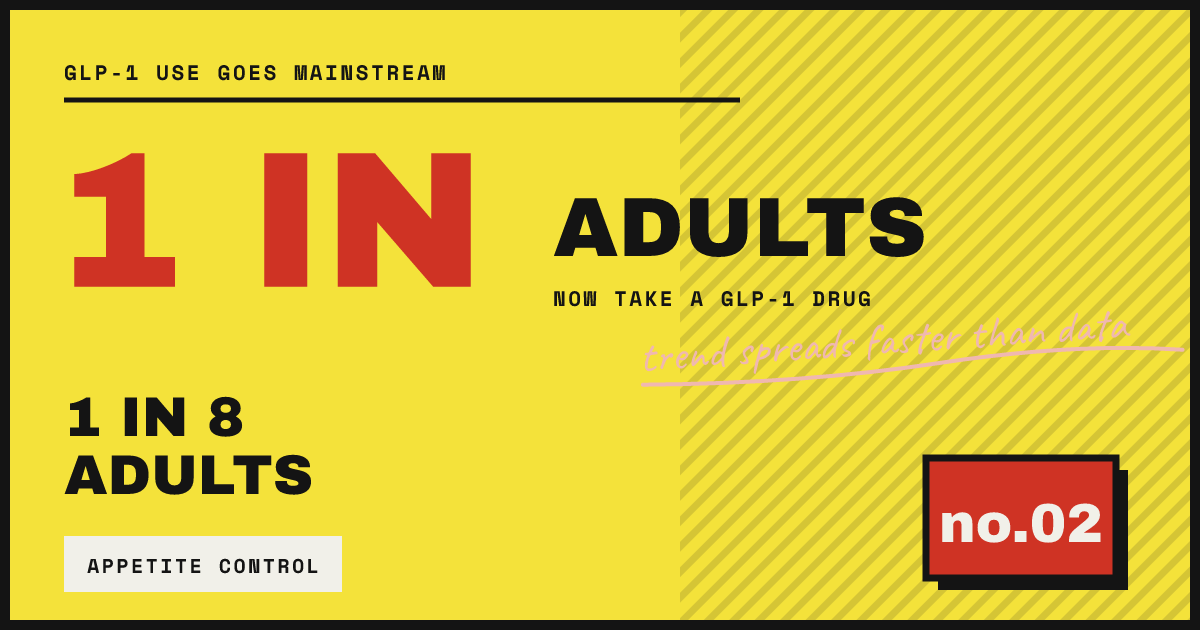
Three forces are pushing the conversation: cost, side effects, and social media. People are cutting their Ozempic dose in half, stretching their Zepbound supply an extra week or two, or buying compounded doses from telehealth platforms, and the trend is becoming more common. Microdosing is trending especially in conversations about reducing food noise or avoiding side effects. It doesn't hurt that GLP-1 use itself has become mainstream: a 2025 KFF poll found 1 in 8 adults now take a GLP-1 like Ozempic or Wegovy, and use is highest among adults ages 50 to 64. When a habit is this widespread, the shortcuts spread just as fast — often faster than the science backing them.
Does Microdosing GLP-1 Drugs Actually Work?
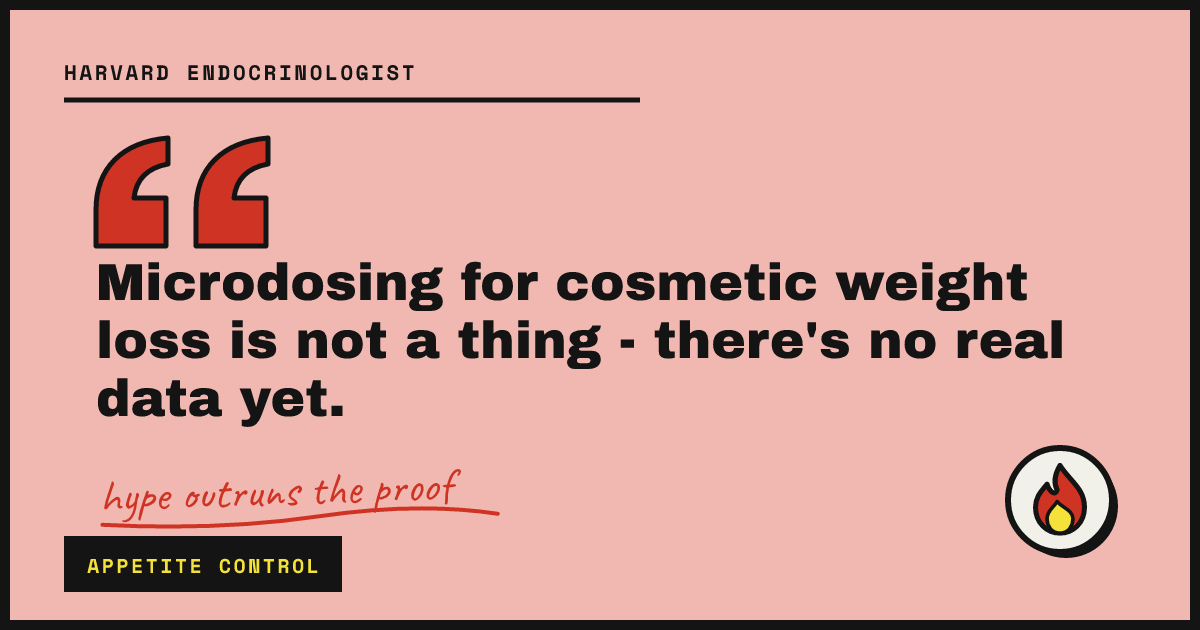
The honest answer is: nobody knows yet, and several physicians say the enthusiasm is running ahead of the proof. One Harvard Medical School endocrinologist has stated plainly that microdosing GLP-1s for cosmetic weight loss 'is not a thing,' that there are no legitimate long-term data to support it, and that there isn't even a single definition of microdosing. Clinically, low doses aren't nothing — but they aren't the whole picture either. Real-world reports suggest some appetite suppression at low doses, but clinical weight loss of 5 percent or more of body weight generally requires reaching 1.0 mg or higher. A 2026 review in the New England Journal of Medicine even noted that questions about long-term dosing and durability of results remain open areas of research, not settled strategy. In other words, a smaller dose may take the edge off appetite for some people, but it isn't a proven path to meaningful results on its own.
Is It Safe to Microdose a GLP-1 Medication?
Safety is the bigger concern for most doctors, mainly because of where the smaller doses come from. Microdosing depends almost entirely on compounded semaglutide, since commercial pens deliver fixed doses that cannot be safely subdivided — and that supply chain is tightening. In March 2026, the FDA issued more than 50 warning letters to telehealth firms and compounding pharmacies in a single enforcement wave, the largest coordinated action against GLP-1 compounders in US history. Oversight matters here because compounded drugs aren't FDA-approved or held to the same manufacturing standards, and a 2024 FDA investigation found some compounded semaglutide products used salt forms not equivalent to the approved drug. Add to that the fact that nearly half of people microdosing did so without consulting their doctor, and it's easy to see why clinicians keep repeating the same advice: any change to a prescribed medication, including adjusting the dose, belongs in a conversation with the prescriber, not a group chat.
Where Gentle, Herbal Appetite Support Fits In
None of this means you have to choose between a full prescription dose and nothing at all. A lot of the appeal of microdosing is really about wanting quieter cravings and fewer 'just one more bite' moments without the full weight of a prescription commitment. That's a different goal than the medication itself is built for, and it's exactly the lane herbal support is meant to occupy. VYNEHERB's MooMoo Jelly was formulated as an easy, on-the-go chewable for exactly those in-between moments — a small daily habit that supports appetite steadiness rather than something positioned to replace or mimic a prescription drug. Think of it as support for the habit layer of eating, not a substitute for medical care.
Building an Appetite Strategy That Doesn't Depend on a Trend
Whatever your starting point, a few fundamentals tend to hold up better than any hack: consistent protein at meals, fiber from whole foods rather than one giant fiber bomb, steady hydration, and sleep that isn't an afterthought. Herbal traditions — including 500 years of Korean herbal practice — have long paired specific botanicals with these daily habits to support a feeling of steadiness around food, rather than promising dramatic overnight change.
- Eat protein and fiber earlier in the day to support satiety later
- Keep a consistent eating window instead of skipping meals unpredictably
- Pair any supplement, herbal or otherwise, with sleep and movement basics
- Talk to a healthcare provider before starting or changing any medication, prescription or otherwise
Frequently Asked Questions
Is GLP-1 microdosing FDA-approved?
No. Microdosing is not an FDA-approved regimen, and the agency has never sanctioned a 'microdose' GLP-1 indication — every microdose protocol is off-label. Any dosing changes should go through your prescribing clinician.
Can herbal supplements replace a GLP-1 medication?
No. Herbal appetite supplements are formulated to support daily eating habits and a general sense of fullness, not to replicate or replace prescription GLP-1 therapy. They occupy a different, gentler lane and aren't a substitute for medical treatment.
Why are so many people trying GLP-1 microdosing right now?
Cost, side-effect avoidance, and social media are the biggest drivers, with many people learning about the practice online rather than from a clinician. That said, evidence for the practice remains thin, and most experts recommend discussing any dosing questions directly with a prescriber.