Yes, Ozempic and other GLP-1 drugs can cause some muscle loss, because fast weight loss almost never comes from fat alone. The medication itself doesn't break down muscle tissue, but the steep calorie deficit it creates can pull from lean mass if protein and movement don't keep up. Here's what the research actually shows, and how a hanbang-style focus on strength and 'qi' fits alongside a modern GLP-1 routine.
Key takeaways
- Clinical trial data has linked semaglutide treatment to lean muscle mass loss of up to roughly 13.9%, equal to about 15 pounds in some study populations.
- Without enough protein or resistance training, research estimates that 25 to 40 percent of total weight lost on a GLP-1 drug can be lean mass rather than fat.
- Spreading 1.6 to 2.2 grams of protein per kilogram of body weight across the day is linked to better muscle preservation during a calorie deficit.
Does Ozempic Cause Muscle Loss?
Yes, Ozempic and other GLP-1 medications can cause muscle loss, and this applies across the whole drug class, not just semaglutide. The mechanism isn't mysterious: when appetite drops sharply and food intake falls, the body looks for energy wherever it can find it, and that sometimes includes muscle protein alongside fat stores.
Clinical trials have shown GLP-1 agonist drugs like semaglutide can lead to a 13.9% loss of lean muscle mass, equal to roughly 6.9 kg or 15 pounds, during treatment. That number sounds alarming on its own, but lean mass includes more than contractile muscle fiber — it also counts water, glycogen, and connective tissue, so the real-world strength impact varies a lot by person.
Why Rapid Weight Loss Pulls From Muscle, Not Just Fat
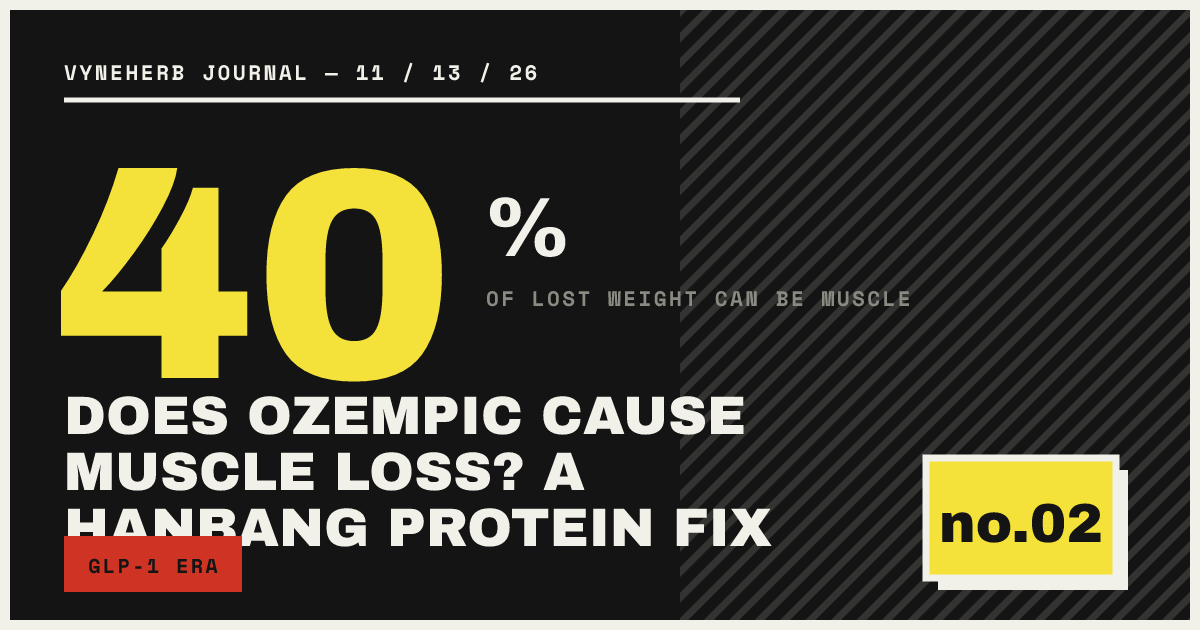
Any aggressive calorie deficit, whether from a drug or a crash diet, puts muscle at some risk. Without exercise and adequate protein, research suggests 25 to 40 percent of total weight lost on Ozempic can be lean mass rather than fat. The faster the drop on the scale, the more likely the body is to treat muscle as a spare energy reserve.
Newer lab research adds a twist. In mouse studies, semaglutide reduced skeletal muscle mass, and while that loss didn't change strength under normal conditions, the picture shifted once the muscles were put under physical stress. In plain terms: muscle quantity may look fine on a scan, but muscle quality and resilience can still quietly decline if it isn't actively maintained.
How Much Protein Do You Need on a GLP-1?
Protein is the single biggest lever most people can control. A reasonable target is roughly 1.6 grams of protein per kilogram of body weight per day, up to about 2.2 grams per kilogram while in a calorie deficit. Timing matters too — spreading protein evenly, around 25 to 30 grams across four daily meals, appears to trigger more sustained muscle protein synthesis than loading it all into one sitting.
Because appetite suppression is the whole point of a GLP-1 medication, this can be harder than it sounds. Since the drug reduces hunger, protein intake has to be intentional, which usually means eating it first before anything else on the plate.
Hanbang Herbs for Qi and Muscle Strength
Long before GLP-1 drugs existed, Korean hanbang practitioners were thinking about how the body holds onto strength as it changes. One classical formula, Jaeumganghwa-Tang, offers a useful window into that thinking. It appears in the Donguibogam, the traditional Korean medical text compiled by Heo Jun, as a remedy for 'kidney deficiency' — a pattern linked to age-related changes in energy, vision, hearing, and muscle function.
Modern lab work has started to test that old framing. Researchers found the formula had beneficial effects on age-related loss of muscle mass and function in animal models. That doesn't mean a tea replaces training or protein — it means hanbang's centuries-old lens on strength and vitality lines up, in broad strokes, with what today's muscle research is also pointing to.
How to Prevent Muscle Loss on Ozempic
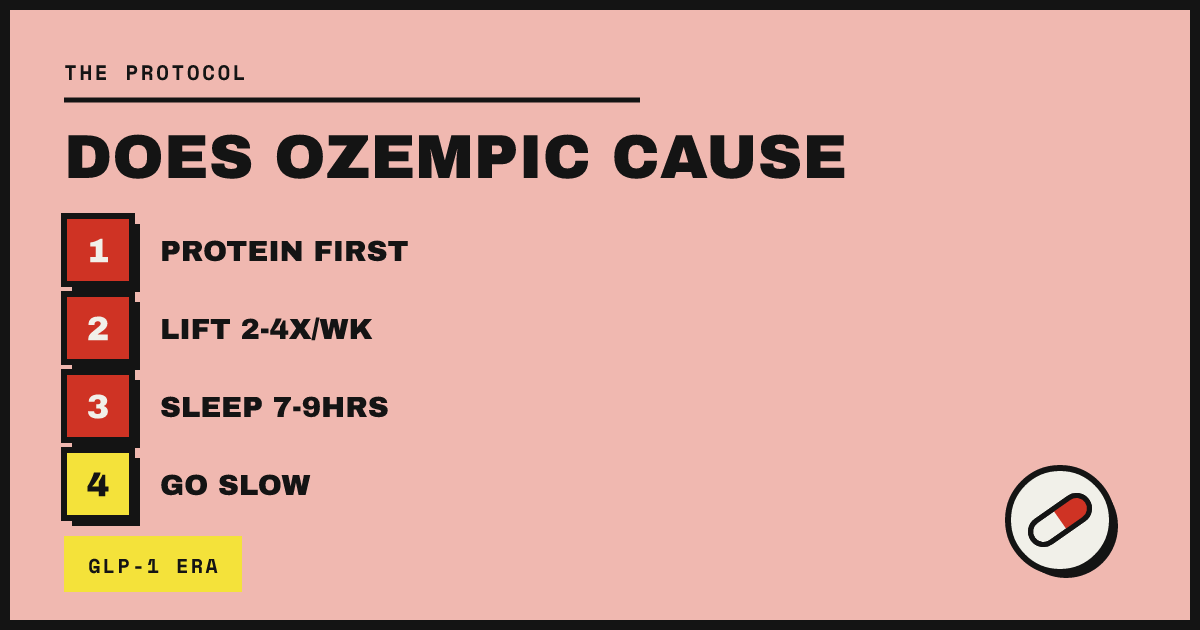
The good news is that muscle loss on a GLP-1 is largely about habits, not fate. A practical protocol looks like lifting weights two to four times per week, eating roughly 0.7 to 1.0 grams of protein per pound of goal body weight daily, avoiding calorie intake below 1,200 to 1,500 per day, and getting seven to nine hours of sleep.
On days when appetite is low and food volume feels impossible, a clean protein source can help close the gap without relying on willpower alone — something like Daily Plant Protein is designed for exactly that kind of easy, between-meal top-up. Always loop your prescribing provider in on any changes to your routine while you're on a GLP-1 medication.
Frequently Asked Questions
Is muscle loss on Ozempic permanent?
No. Muscle can be rebuilt with consistent strength training and adequate protein, though it tends to come back more slowly than it was lost. Staying consistent with both habits is what determines how much comes back.
Does this happen with Wegovy, Mounjaro, and Zepbound too?
Yes. Ozempic, Wegovy, Mounjaro, and Zepbound can all cause some muscle loss, because no method of losing weight removes fat alone. The risk comes from the pace of weight loss and daily habits, not one specific brand name.
Can herbal supplements replace protein or exercise for preventing muscle loss?
No. Hanbang herbs and modern protein strategies work best as complements to each other, not substitutes. If you're on a GLP-1 medication, talk with your healthcare provider before adding any new supplement to your routine.