
Tangerine peel tea — known in Korean hanbang as jinpi cha (진피차) — is one of the simplest herbal fixes for a heavy, bloated stomach after a big meal. Dried tangerine peel has been used in Traditional Chinese Medicine for over a thousand years for digestive purposes — relieving bloating, supporting appetite, and easing nausea. The same dried peel, called jinpi in Korea, shows up in hanbang kitchens and apothecaries for exactly the same reason: to keep digestive qi moving instead of stalling into that tight, stuck feeling.
Key takeaways
- Jinpi, or dried tangerine peel, is a qi-regulating herb long used in Korean and East Asian medicine to ease bloating and food stagnation.
- The peel's main compounds, hesperidin and nobiletin, have been studied for effects on digestion, gut motility, and cholesterol levels.
- Traditional practice ages the peel for months or years before use, since older peel is considered more potent for digestive support.
What Is Tangerine Peel Tea Good For?
Tangerine peel tea is traditionally used to support digestion — specifically bloating, gas, poor appetite, and that overly-full feeling after a heavy meal. Tangerine peel tea aids digestion by boosting enzymes and regulating qi, helping to reduce bloating and indigestion. In hanbang terms, the dried peel is classified as a qi-regulating herb, meaning its traditional job is to keep digestive energy flowing smoothly through the stomach and intestines rather than stagnating.
Beyond digestion, it's also used for mild respiratory comfort and as a gentle warming drink in colder months — but bloating relief is the use case most US readers are searching for, and it's the one with the most everyday evidence behind it.
What Is Jinpi, and How Does Hanbang Use It?
Jinpi (진피) is the Korean name for dried, aged tangerine or mandarin peel — the same herb known as chen pi in Chinese medicine. Its acrid, warm nature moves stagnant Qi in the digestive system, restoring normal peristalsis and the smooth flow of substances through the gut, while its bitter taste dries accumulated dampness weighing down the Spleen. In practice, that translates to a bitter-citrus tea sipped to settle a heavy stomach.
Hanbang practitioners typically pair jinpi with other warming digestive herbs rather than using it alone, since it supports healthy digestion by easing bloating, nausea, and poor appetite, and it helps clear excess phlegm from the lungs during coughs and colds — a dual respiratory-digestive role that's unusual for a single herb. In Korea, washing and drying tangerine peels thoroughly to make tea is a common home remedy, not just a pharmacy purchase.
Does Tangerine Peel Tea Help With Bloating?

Traditionally, yes — jinpi is specifically indicated for bloating tied to qi stagnation, the hanbang term for digestion that has stalled. Among East Asian digestive teas, aged tangerine peel tea is considered best for bloating with qi stagnation, nausea, and poor appetite, since it regulates qi, dries dampness, and harmonizes the stomach.
Modern lab research offers some supporting clues for why. Chenpi contains hesperidin and naringenin, flavonoids shown in published research to stimulate gastric secretion, support gut motility, and reduce symptoms of bloating and indigestion. That's consistent with centuries of traditional use, though most of this research is still in cell and animal models rather than large human trials.
What Does Modern Research Say About Jinpi's Compounds?
Dried tangerine peel contributes hesperidin, nobiletin, and polymethoxylated flavones (PMFs) — bioactive compounds with documented digestive, anti-inflammatory, and cardiovascular activity in modern research. Hesperidin is the most studied of the three. A 2022 meta-analysis covering nine randomized controlled trials with 2,414 subjects found that hesperidin supplementation significantly reduced LDL cholesterol, total cholesterol, and triglycerides compared to placebo.
Nobiletin, the compound that gives aged peel its deeper flavor, is of particular interest to metabolism researchers. Some animal studies suggest that nobiletin from tangerine peel may help regulate metabolism and prevent obesity, though we need more human research. None of this makes jinpi tea a treatment for any condition — but it does explain why an herb this old keeps showing up in new research.
How Do People Actually Drink Jinpi Tea?
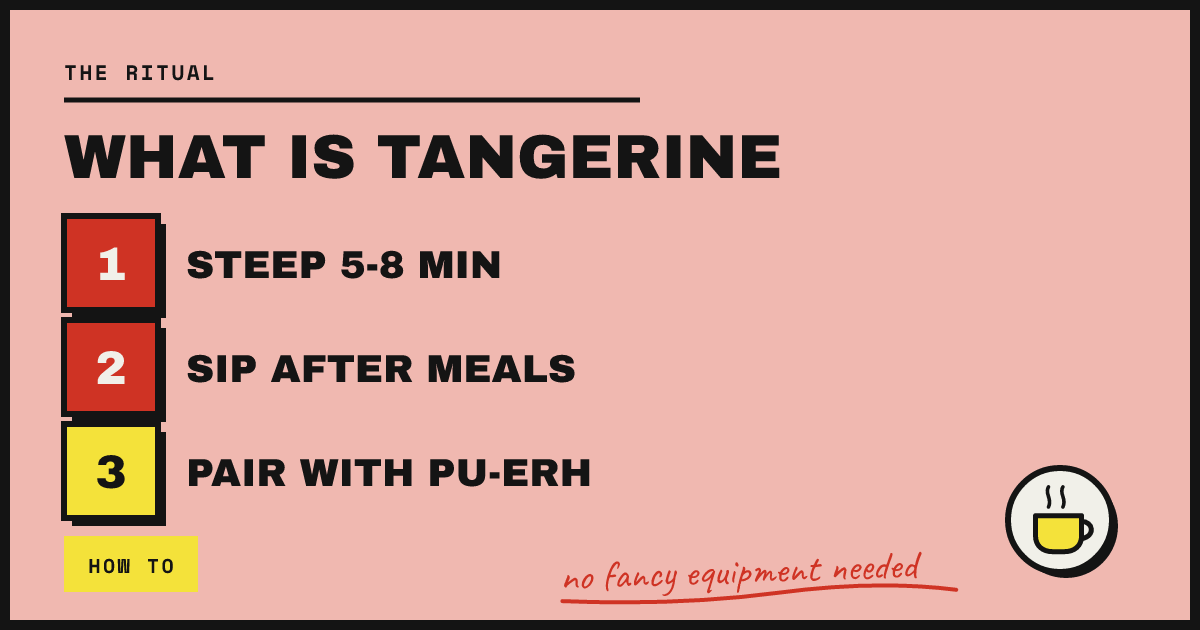
The classic method is simple: steep three to five grams of dried, aged peel in freshly boiled water for five to ten minutes, then sip it warm after a meal. Chen Pi is also the key ingredient in the popular Cantonese combination of chenpi with pu-erh, which doubles the digestive benefits. The older the peel, the more effective it's considered, with genuinely aged peel treated as medicinal grade.
In the US, the easiest entry point is swapping one afternoon coffee for a warm, citrusy cup instead. That's the same post-meal, de-bloat principle behind VYNEHERB's Yeori Tea, a hanbang-style blend built for exactly this ritual — steeped after a heavy meal or in place of a second coffee, no foraging for quality aged peel required.
Frequently Asked Questions
Is tangerine peel tea the same as regular tea?
No. Tangerine peel tea is an herbal infusion made from dried citrus peel, not from the Camellia sinensis plant used for green, black, or oolong tea. On its own it's naturally caffeine-free, though many people blend it with pu-erh or green tea for flavor and effect.
How long should tangerine peel be aged before it's used?
Traditional preparations favor peel aged anywhere from one to several years. The older the peel, the more effective it's considered, with genuinely aged peel treated as medicinal grade. Freshly dried peel can still be used, but it tends to taste sharper and less mellow.
Can I make jinpi tea at home from orange peels?
Washing and drying the peels thoroughly before steeping is the basic home method, ideally using organic, unsprayed fruit. If you take prescription medication, check with a healthcare provider first, since citrus peel compounds can affect how the liver processes certain drugs.