No — there's no reliable evidence that the viral 'cortisol cocktail' lowers cortisol levels or melts a 'cortisol belly.' The trendy mix of orange juice, coconut water, and sea salt is mostly a hydration drink wearing a hormone-hacking costume. That doesn't make it harmful, it just isn't doing what the captions promise, and there are better-studied ways to support your body's stress response.
Key takeaways
- No published clinical trial has tested the full orange-juice, coconut-water, and salt recipe and shown that it lowers cortisol or causes weight loss.
- The drink's real, measurable effects come from hydration, electrolytes, and vitamin C, not hormone regulation.
- Adaptogenic herbs used in traditional medicine, including Korean ginseng and schisandra, have decades of research behind their effect on the body's stress response, a different mechanism than a juice-and-salt mocktail.
Does the Cortisol Cocktail Really Work?
Mostly, no. Reviewers who dug into the recipe found that there is no scientific research or evidence that cortisol cocktails work for weight loss. Coverage of the trend has echoed that finding, noting there's no evidence this drink can significantly reduce stress or weight by lowering cortisol levels, even though some of the ingredients do offer real nutritional perks.
Outlets that pressed experts further got a similarly blunt answer: there's no scientific research to support the cocktail's broad claims, and the suggested doses are unlikely to meaningfully affect cortisol. In other words, the name promises hormone control; the ingredient list delivers juice and salt.
What's Actually in the Viral Drink?
Most versions follow the same basic formula. Social posts typically build it from coconut water, orange and lemon juice, (chelated) magnesium powder, sea salt, and sparkling water, and some creators swap in packets filled with a mixture of ashwagandha, l-theanine, magnesium, vitamin D3, and beetroot powder instead.
None of that is dangerous for most healthy adults in moderation. But if you're watching sodium, have kidney issues, or need to manage blood sugar, the salt and citrus-juice content is worth a second look before you make this a daily habit.
Where Does the 'Cortisol Belly' Claim Come From?
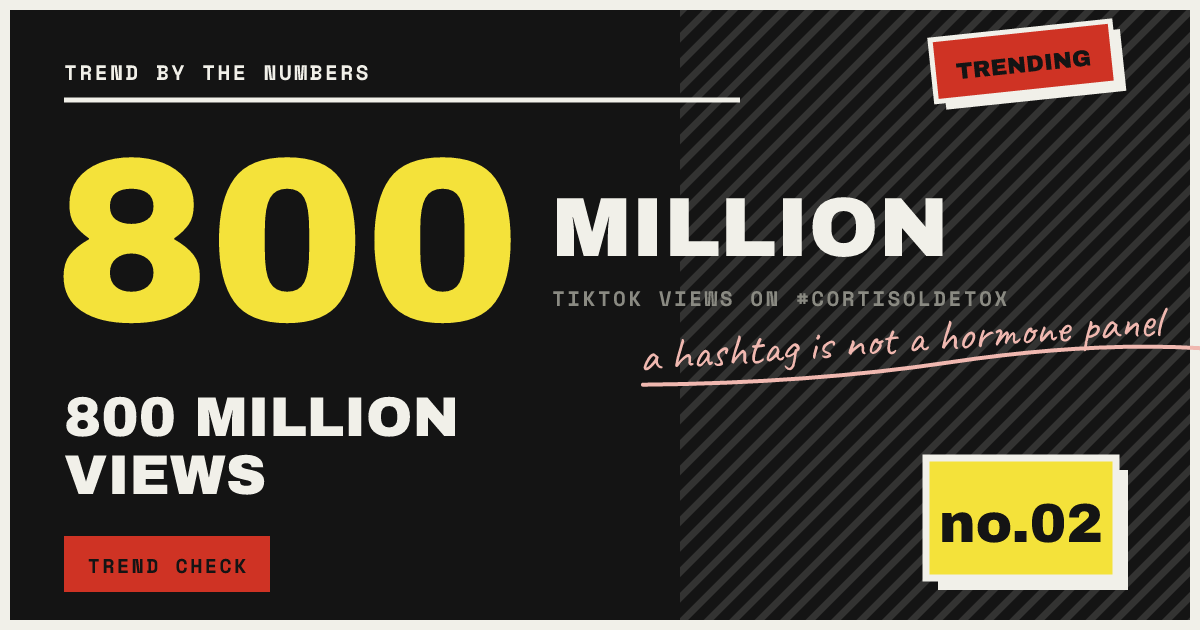
The phrase 'cortisol belly' has become shorthand for the idea that stress hormones alone are responsible for stubborn midsection weight, and it has fueled the entire trend. One tracker of the trend noted the hashtag #cortisoldetox has accumulated close to 800 million TikTok views, with related tags adding millions more.
The bigger concern isn't the drink itself, it's what it teaches people to do instead. Researchers tracking the trend flagged the habit of self-diagnosing hormonal problems from a mirror or a TikTok checklist and delaying a real medical evaluation for symptoms that might have another cause. If your stress, sleep, or weight concerns feel persistent, that's a conversation for a healthcare provider, not a mocktail recipe.
What Adaptogenic Herbs Can Actually Do
This is the part of the stress conversation that actually has data behind it. One evidence review found that Panax ginseng has demonstrated cortisol modulation, improved mental performance under fatigue, enhanced working memory, and subjective improvements in wellbeing across multiple randomized controlled trials. Another comparison of classical adaptogens noted that ashwagandha, rhodiola, eleuthero, and Korean ginseng in particular appear to modulate both systems, reducing the magnitude of cortisol elevation in response to acute stress.
Schisandra, a berry long used in East Asian herbal medicine, has its own body of research. One summary of cortisol-focused botanicals noted that schisandra lignans have been shown to lower cortisol levels and improve the body's antioxidant defenses, which are often depleted during chronic stress. That's a fundamentally different claim than 'mix this juice and watch your cortisol drop' — it's slow, cumulative, and herb-specific rather than cocktail-specific.
A Saner Morning Ritual
Keep the parts of the trend that are genuinely good for you. A glass of water with electrolytes and a bit of vitamin C in the morning is a perfectly reasonable habit — just don't expect it to rewrite your hormones. Pair it with sleep, movement, and regular meals, which do far more for cortisol over time than any single drink.
If what you're really chasing is a steadier morning metabolism and less of that sluggish, stress-snacky feeling, a formulated herbal ritual like Burning On gives you the same 'mix it and drink it' routine, built from traditional botanicals instead of a social-media guess.
How Hanbang Views Stress and Appetite
Traditional Korean herbal medicine never treated stress as a single hormone to chase. It treated it as a whole-body pattern — digestion, energy, sleep, and mood moving together, with herbs like ginseng and schisandra used to gently support that balance over weeks, not one viral sip.
That's the lens we'd encourage you to borrow: pick one or two well-studied herbs, give them time, and let your daily habits do the rest. A cortisol cocktail can still be a nice-tasting part of your morning. Just hold it to what it is — hydration with good PR — not a stress cure.
Frequently Asked Questions
Does the cortisol cocktail actually lower cortisol?
No controlled study has shown that the standard orange juice, coconut water, and salt recipe lowers cortisol levels. Its benefits come mainly from hydration and electrolytes, not hormone changes.
Is a cortisol cocktail bad for you?
For most healthy adults, occasional cortisol cocktails are not harmful. People managing sodium intake, blood sugar, or kidney conditions should check with a healthcare provider before making it a daily habit.
What's a better alternative to the cortisol cocktail?
Focus on sleep, regular meals, and movement first, since those influence cortisol far more than any single drink. If you want herbal support for your morning routine, look for formulas built around researched adaptogens like ginseng or schisandra rather than juice and salt alone.