
A puffy face in the morning is almost always fluid, not fat. Salt, alcohol, sleep position, and a sluggish lymphatic system are the usual triggers, and most swelling fades within an hour or two of getting up and moving. Korean herbal medicine, or hanbang, has a specific name for this kind of overnight buildup: su-dok, or "water toxin" — a sign that fluid has stopped moving the way it should.
Key takeaways
- Morning facial puffiness is typically caused by fluid retention rather than fat, and it usually resolves within a few hours of waking.
- High sodium intake, alcohol, and lying flat overnight all slow how efficiently fluid drains from facial tissue while you sleep.
- Traditional Korean herbal medicine describes this kind of overnight fluid stagnation as su-dok, or water toxin, and has long addressed it with warming, gently diuretic herbs.
Why Is My Face Puffy in the Morning?
A puffy face in the morning is almost always fluid that pooled in facial tissue overnight rather than weight gained while you slept. Lying flat for hours removes the gravity assist that normally helps fluid drain from the face during the day, so it settles around the eyes, cheeks, and jawline instead.
A salty dinner, a glass of wine, allergy exposure to dust or pillow fabric, and the natural rise in cortisol around waking can all add to the effect. For most people the swelling softens within thirty to ninety minutes of being upright. Puffiness that is severe, one-sided, painful, or doesn't fade by midday is worth mentioning to a doctor, since it can occasionally point to thyroid, kidney, or sinus issues.
What Hanbang Calls "Water Toxin"
In hanbang, the body's digestive and fluid-handling systems are closely linked. When that system runs sluggish, practitioners describe the result as su-dok, loosely translated as water toxin or dampness — fluid that has stopped circulating efficiently and shows up as heaviness, bloating, or a doughy morning face.
Rather than reaching for harsh diuretics, traditional practice leaned on warming teas, lighter evening meals, and gentle movement to help fluid keep moving. The idea isn't to force water out aggressively; it's to support the systems that were already supposed to be draining it.
Corn Silk Tea: The Hanbang Herb for Puffiness
Oksusu-suyeom-cha, or corn silk tea, is a staple in Korean kitchens, usually brewed from the dried silky strands saved from corn husks. It's long been treated as common knowledge in Korean households that this mild, slightly sweet tea supports the body in moving along excess fluid after a salty meal.
It isn't a drug and it isn't a fast fix — it's closer to a daily ritual than a remedy, often sipped warm alongside or instead of plain water. That gentle, repeatable habit is exactly the hanbang approach to su-dok: small, consistent support rather than a one-time flush.
Does Drinking More Water Actually Help?
Yes, somewhat counterintuitively, staying hydrated can reduce puffiness rather than add to it. When the body senses dehydration, it tends to hold on to sodium and water as a protective measure, which can make morning swelling worse, not better.
The goal is steady hydration spread across the day rather than a large glass right before bed, which mostly just means more time lying down with fluid still working its way through. Pairing water with potassium-rich foods can also help the body balance sodium more efficiently overnight.
The Gut-Face Connection

Digestive bloating and facial puffiness often travel together, since both involve fluid and inflammation responding to the same triggers — salt, late meals, and a gut that's working harder than it should overnight. Skin tissue is largely water, so when the gut and lymphatic system are sluggish, the face is frequently the first place it shows.
This is the same logic behind gut-balance routines built for de-bloating: supporting regularity and reducing overnight bloat can echo in a lighter-looking morning face, not just a flatter stomach. A gentle formula like Belly Light is designed around that gut-balance idea, meant to sit alongside — never replace — the basics of hydration, lower sodium, and sleep.
A Simple Morning De-Puff Routine
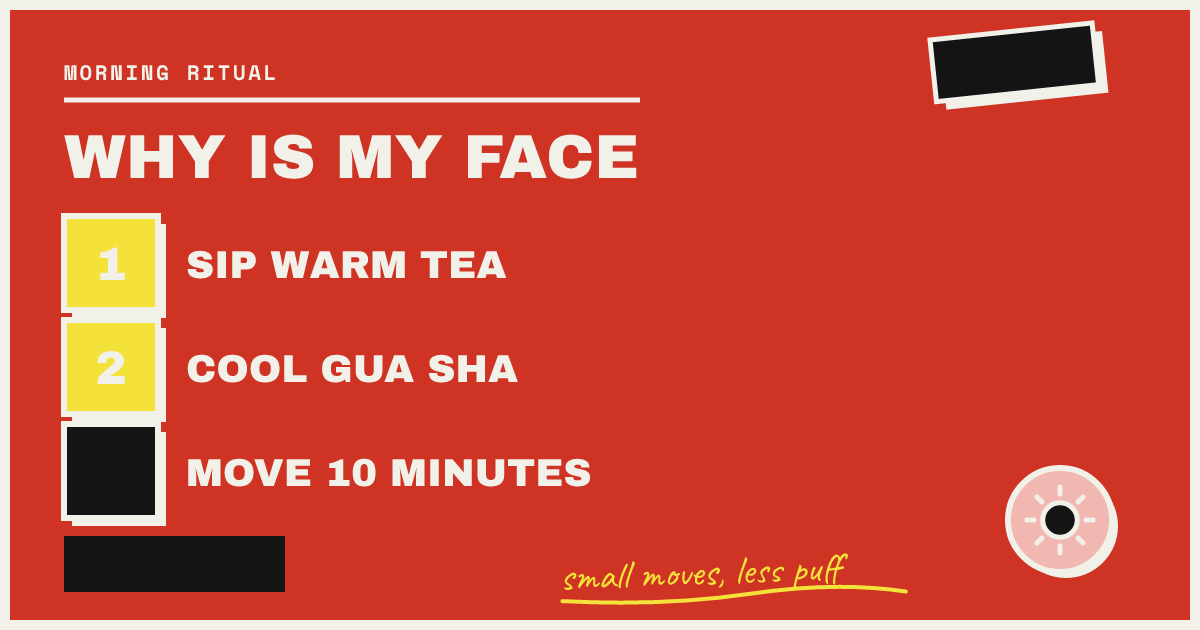
None of these habits are dramatic, which is the point — hanbang favors consistency over intensity.
- Start with a warm cup of corn silk or other mild herbal tea instead of reaching for salty breakfast foods.
- Use a cool gua sha tool or chilled spoon along the jaw and under the eyes to encourage lymphatic movement.
- Get upright and move for ten minutes — a short walk helps gravity and circulation do their job faster than sitting still.
- Sleep slightly elevated and lower sodium at dinner the night before a morning you want to look de-puffed.
Frequently Asked Questions
Why is my face more puffy some mornings than others?
It usually comes down to what you ate and drank the night before, how you slept, and where you are in your hormonal cycle. A saltier dinner, an extra glass of wine, or sleeping face-down can each tip the scale toward more visible swelling.
How long does morning facial puffiness usually last?
For most people it eases within thirty to ninety minutes of being upright and moving around. It can linger longer after a very salty or alcohol-heavy evening, or if you're dehydrated.
Is it safe to drink corn silk tea every day?
Corn silk tea is traditionally consumed as a mild daily beverage in Korean households and is generally well tolerated. Anyone taking diuretic medication or managing a kidney condition should check with a healthcare provider before making it a regular habit.