
Yes, but with real limits: a 2026 review of the strongest evidence to date found that oral collagen supplements can modestly improve skin hydration and elasticity when taken consistently for months — but they are not a proven fix for deep wrinkles or rough texture. That nuance matters more than the marketing. The real question isn't whether one capsule is magic, it's whether your body has what it needs to keep making collagen on its own, and that's where diet, antioxidants, and centuries-old hanbang thinking about skin actually earn their keep.
Key takeaways
- A 2026 umbrella review of 113 clinical trials and nearly 8,000 participants found that long-term collagen supplementation is associated with improved skin hydration and elasticity.
- The same review found no significant improvement in skin roughness, meaning collagen pills are not a validated treatment for deep wrinkles.
- Natural collagen production begins declining in the early twenties, which is why skin-support strategies work best when started consistently rather than occasionally.
Do Collagen Supplements Work for Skin?

Collagen supplements can help with hydration and elasticity, but they don't erase wrinkles. Researchers evaluated 113 randomized controlled trials involving nearly 8,000 participants and found benefits for skin elasticity and hydration, musculoskeletal health, and osteoarthritis. For skin specifically, the results were consistent: taken daily over long periods, collagen supplements were associated with improved skin elasticity and hydration. The catch is that the study did not show significant improvement in skin roughness, and it does not reverse established lines. In other words, collagen can plump and hydrate — it isn't an eraser.
What the Biggest Collagen Study Ever Found

This wasn't a single small trial — the new study combined findings from 16 systematic reviews, 113 randomized controlled trials, and nearly 8,000 participants from around the world. The headline takeaway from the researchers was measured, not hyped: benefits appear to accumulate gradually, suggesting that collagen should not be viewed as an "anti-wrinkle 'quick fix,'" but as a foundational dermal support for individuals seeking holistic skin maintenance. That word — foundational — is the key. Collagen supplements seem to work best as one layer of a broader skin strategy, not a stand-alone solution.
Dermatologists echoed that caution. Oral collagen supplements are not currently recommended to treat skin aging, although they can be considered along with other more effective and well studied interventions. Translation: sunscreen, sleep, and nutrition still do the heavy lifting.
Why Collagen Alone Isn't the Whole Beauty-From-Within Picture
Collagen is a protein, and your body needs the right raw materials to keep building it. Collagen can be found in our bones, skin, muscles, tendons, and cartilage, and two-thirds of our skin is made up of collagen. But collagen production also decreases with age, starting in our 20's, which leads to wrinkles and dry skin — which is exactly why consistency matters more than any single ingredient.
This is also where inflammation quietly works against your skin. Chronic low-grade inflammation, poor sleep, and a diet heavy in sugar and refined carbs all interfere with the same collagen-building, hydration-holding systems that supplements are trying to support. Beauty-from-within isn't one pill; it's gut health, blood sugar balance, antioxidants, and sleep all pulling in the same direction.
The Hanbang Angle: Herbs Korean Practitioners Use for Skin From Within

Long before "beauty from within" was a marketing phrase, Korean hanbang medicine was treating skin as a mirror of internal balance — particularly blood and fluid circulation. Herbs like gugija (goji berry) and daechu (jujube) have traditionally been steeped into teas and tonics believed to support antioxidant intake and a healthy glow, while warming herbs were used to encourage circulation to the face. This is structure-and-function thinking, not a cure for anything — it's about giving the body steady support rather than chasing a single miracle ingredient.
The throughline between hanbang tradition and the new collagen research is actually the same: consistency beats intensity. A tea sipped daily for months, or a supplement taken the same way, tends to outperform anything used sporadically.
How to Give Your Skin the Building Blocks It Needs
If collagen supplements work best as a "foundational" layer, the layers underneath it matter just as much. A few practical habits do a lot of quiet work:
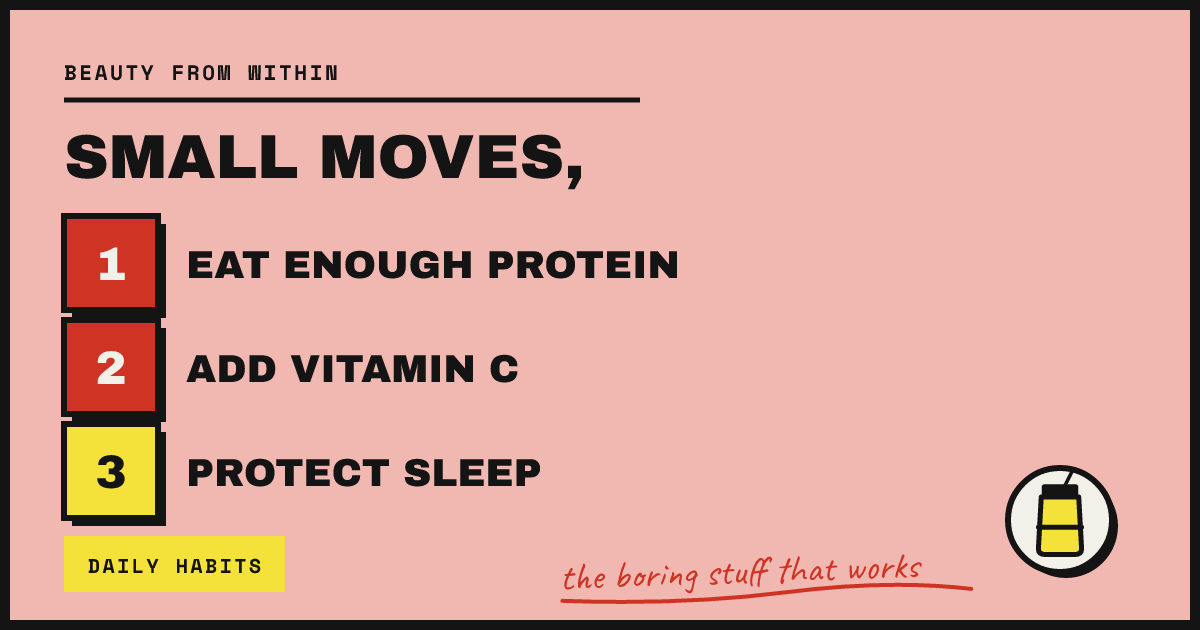
- Eat enough total protein daily, since amino acids like glycine and proline are the literal building blocks your body uses to make its own collagen.
- Pair protein with vitamin C and antioxidant-rich produce, which your body needs to actually assemble those amino acids into collagen.
- Protect sleep and manage stress, since both affect inflammation and how well your skin holds onto hydration overnight.
For people who struggle to get consistent protein from meals alone, a clean plant-based option like Daily Plant Protein can help fill that daily gap, giving your skin the amino acid supply it needs to keep up its own collagen-building work — alongside sleep, sunscreen, and the rest of your routine, not instead of them.
Frequently Asked Questions
How long does it take to see results from collagen supplements?
Most of the research reviewed showed changes in skin hydration and elasticity after roughly 8 to 12 weeks of consistent daily use, not days. Benefits tend to build gradually rather than appear suddenly, so sporadic use is unlikely to show much.
Is marine collagen better than bovine collagen for skin?
Marine collagen is well absorbed and a good option for people avoiding beef, but current evidence doesn't strongly support the idea that it dramatically outperforms other forms for skin specifically. Dosage and consistency appear to matter more than the source.
Can diet alone improve skin without any supplements?
Diet plays a major role — adequate protein, vitamin C, antioxidants, and hydration all support your skin's own collagen production and barrier function. Supplements can help fill gaps, but they work best layered on top of a solid diet, good sleep, and sun protection rather than replacing them.