Yes, you can usually take herbal supplements with Ozempic, Wegovy, Mounjaro, or Zepbound — but it is not a blanket green light. A short list of specific herbs change how your blood sugar responds, and the slower digestion these drugs cause can shift how any supplement gets absorbed. The short version: most everyday wellness herbs are fine, a few deserve a conversation with your prescriber first, and timing matters more than people expect.
Key takeaways
- Several common herbs, including ginseng, fenugreek, gymnema, and ginkgo biloba, can lower blood sugar and may add to a GLP-1's glucose-lowering effect.
- GLP-1 medications slow stomach emptying, which can change how quickly oral vitamins and supplements are absorbed into the body.
- Long-term GLP-1 use has been linked to lower vitamin B12 levels, which is why some providers recommend monitoring it.
Can You Take Herbal Supplements With Ozempic?
In general, yes. Most vitamins and supplements are safe to take with Ozempic. That said, pharmacists routinely ask for a full list before you start, because a handful of natural products do change how the drug behaves in your body.
Before taking Ozempic, tell your doctor and pharmacist about any herbs you take, as well as vitamins and supplements. That single conversation is usually enough to flag anything worth adjusting.
Which Herbs Can Affect Blood Sugar on a GLP-1?
A small group of herbs are known to lower blood sugar on their own, and stacking them with a GLP-1 can push glucose down further than intended. Supplements that impact blood sugar, such as niacin, ginseng, fenugreek, gymnema, and ginkgo biloba, along with supplements that may worsen Ozempic side effects like 5-HTP, berberine, iron, and calcium are the ones to flag with your provider.
- Ginseng, fenugreek, gymnema, and ginkgo biloba (blood-sugar lowering)
- Garlic, since Ozempic may interact with herbs that can lower blood sugar, such as garlic
- Cinnamon, berberine, and bitter melon, flagged for the same reason
None of this means these herbs are off-limits forever. It just means your care team should know they're in the mix.
Why Timing Matters for Supplement Absorption
GLP-1 drugs slow digestion, and that slower pace can change how fast anything you swallow gets absorbed. Fat-soluble vitamins (A, D, E, K) and iron supplements may be absorbed differently due to delayed gastric emptying. That doesn't mean you need to stop taking them — it just means consistency and timing matter more than before.
Fiber supplements deserve their own note. High doses of fiber, like psyllium or methylcellulose, can further slow gastric emptying on top of what semaglutide is already doing, which can worsen bloating, fullness, and constipation. If that sounds familiar, spacing fiber away from meals — or scaling the dose back — is usually the first fix a provider suggests.
Should You Stack Herbal Appetite Suppressants With a GLP-1?
Most clinicians say no, at least not without guidance. Herbal appetite suppressants containing garcinia cambogia, green coffee bean extract, or other appetite-suppressing compounds can have additive effects with Ozempic, potentially leading to extreme appetite loss and dangerously low calorie intake. Layering two appetite-blunting tools, one pharmaceutical and one herbal, can undercut the protein and nutrients your body still needs during weight loss.
This is exactly why VYNEHERB formulas are built for a different lane: supporting everyday appetite habits and routines, not replacing or stacking on top of a prescription. If you're currently on a GLP-1, loop your prescriber in before adding anything marketed as an appetite suppressant.
Where Gentle Herbal Support Still Fits
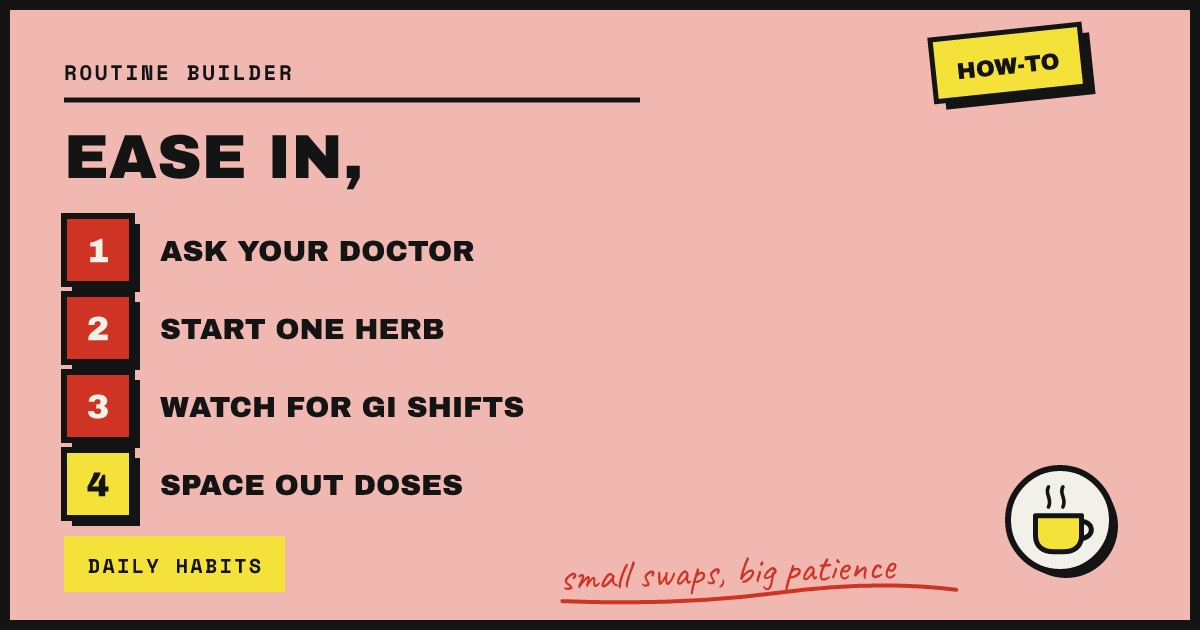
Not every herb is about blood sugar or appetite. Some simply support the daily rituals that get harder to keep once a prescription is doing the heavy lifting elsewhere — a warm drink after meals, a calmer wind-down, a swap for a second coffee. B12 supplementation is actually recommended by many providers, as long-term GLP-1 use can contribute to B12 deficiency, which is a good reminder that gentle, non-stimulant nutritional support can coexist comfortably with a GLP-1.
If you're looking for a low-key habit to build around meals rather than a hunger-blocking formula, something like Yeori Tea works as a caffeine-free, after-meal swap that fits into a GLP-1 routine instead of competing with it — always with your provider's okay.
How to Talk to Your Doctor About Herbal Supplements
Bring a written list, not a mental one. Supplements and vitamins, with specific brands and doses, along with herbal products and natural remedies, is exactly what your provider needs to screen for interactions quickly.
- Name of the herb or supplement, plus the dose and brand
- How often you take it and for how long you've used it
- Why you take it (sleep, digestion, energy, appetite habits, etc.)
Update that list every time something changes — including when you start or stop a GLP-1 dose, which is a conversation to have with your prescriber, not a decision to make solo.
Frequently Asked Questions
Is ginseng safe to take with Ozempic?
Check with your provider first. Ginseng is one of the herbs flagged for its blood-sugar-lowering effect, and supplements that impact blood sugar, such as niacin, ginseng, fenugreek, gymnema, and ginkgo biloba, may add to a GLP-1's effect on glucose.
Can I take a multivitamin with Ozempic?
Generally, yes. Most vitamins and supplements are safe to take with Ozempic, though fat-soluble vitamins may absorb more slowly due to delayed digestion, so consistent timing helps.
Can I take fiber supplements with a GLP-1?
You can, but go slowly. High doses of fiber can further slow gastric emptying on top of what semaglutide is already doing, which can worsen bloating, fullness, and constipation, so smaller doses or different timing often feel more comfortable.