Your Korean body type is your Sasang constitution — one of four hanbang profiles that traditional Korean medicine uses to explain why the same bowl of ginseng chicken soup energizes one person and leaves another flushed and restless. The system sorts people into Tae-yang, Tae-eum, So-yang, or So-eum based on organ strength, temperature tendency, and metabolism, and it's been used in Korean clinics for more than a century. It's having a cultural moment in the US right now as more people search for a framework that explains their own 'runs hot,' 'runs cold,' or 'feels sluggish after certain meals' patterns.
What Is My Korean Body Type?
Your Korean body type, or Sasang constitution, is a classification from traditional Korean medicine that sorts people into four innate types — Tae-yang, Tae-eum, So-yang, and So-eum — based on which internal organs run strong or weak. The system was codified in 1894 by physician Lee Je-ma, and it still shapes how many Korean households think about food, tea, and daily habits today. Unlike a mood or a diet phase, your type is considered fixed for life; what changes is how in or out of balance you are within it.
The basic idea: your lungs, spleen, liver, and kidneys aren't equally strong. Whichever organ is dominant shapes your build, your energy pattern, and which foods and herbs tend to agree with you.
The Four Types, in Plain English
Each type has a shorthand in hanbang culture, and most people recognize themselves in one description almost immediately.
- Tae-eum (Greater Yin): strong liver, weak lungs, a sturdier build, and a calm, patient temperament, with a documented tendency toward weight gain and metabolic issues. This is also the most common type in Korea.
- So-yang (Lesser Yang): strong spleen, weak kidneys — runs hot and energetic, quick and extroverted, sometimes impatient, and prone to inflammation or kidney complaints.
- So-eum (Lesser Yin): strong kidneys, weak spleen — smaller and slender, neat and careful, runs cold with a sensitive stomach.
- Tae-yang (Greater Yang): the rarest type, lung-dominant with a lighter lower body and a tendency to do poorly with heavy, fatty foods.
Why Do Koreans Ask 'Are You Hot or Cold?'
Koreans ask 'hot or cold?' because it's the fastest hanbang shortcut to figuring out what will actually sit well in your stomach. In Sasang thinking, every type leans toward either a warming or a cooling internal climate, and that climate decides whether ginger tea settles you or ginseng leaves you wired. Practitioners describe this as a practical filter rather than a mystical one: does warmth make your digestion and mood better, or does it make you more flushed and restless? If warmth consistently helps, a cold-leaning constitution is more likely; if it consistently backfires, a heat-leaning one is.
This is also why a hanbang grandmother's advice rarely stops at 'eat healthy.' It's 'eat healthy for your climate.'
Does the Research Back This Up?
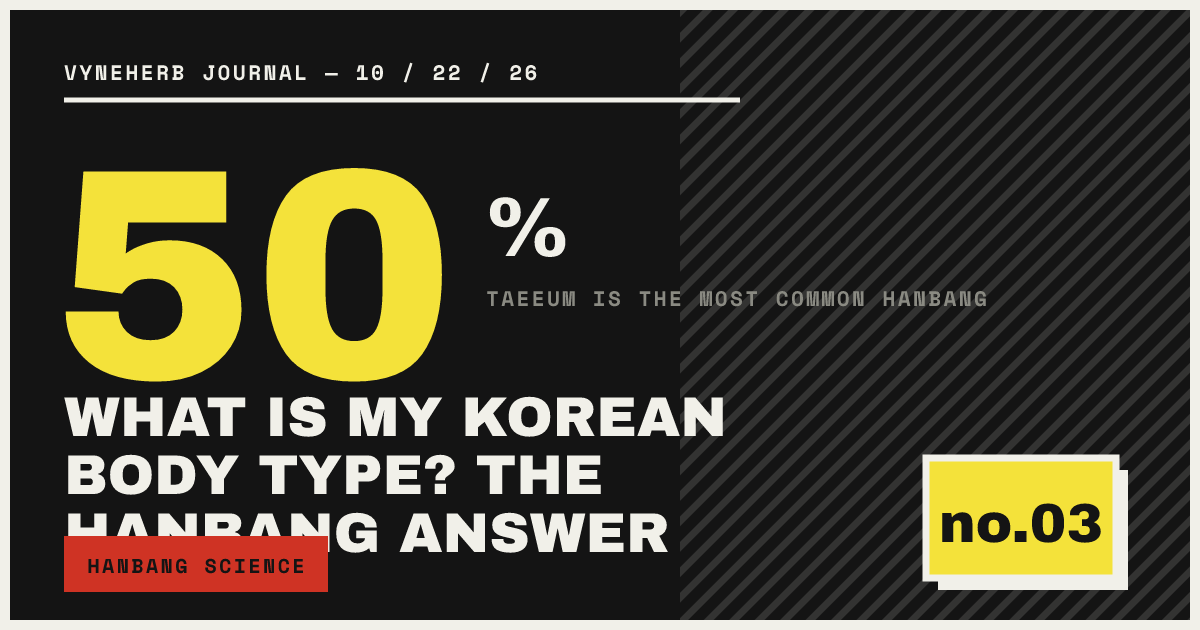
There's a growing body of Korean clinical research testing these old categories with modern tools, and the results are more interesting than a simple personality quiz. A 2012 systematic review found that Sasang typology classifies people into four constitutional types that differ in a distinctive complex of traits including eating behaviors, and researchers set out to map those differences across types. Separately, researchers studying resting metabolic rate found that the Tae-eum type, despite having a high incidence of obesity and metabolic disease, actually shows a higher resting metabolic rate than expected — a genuinely surprising finding that constitutional researchers are still working to explain. None of this makes Sasang typing a diagnostic tool, but it does suggest the old framework is tracking something real in how different bodies handle food and energy.
How to Get a Rough Read on Your Own Type
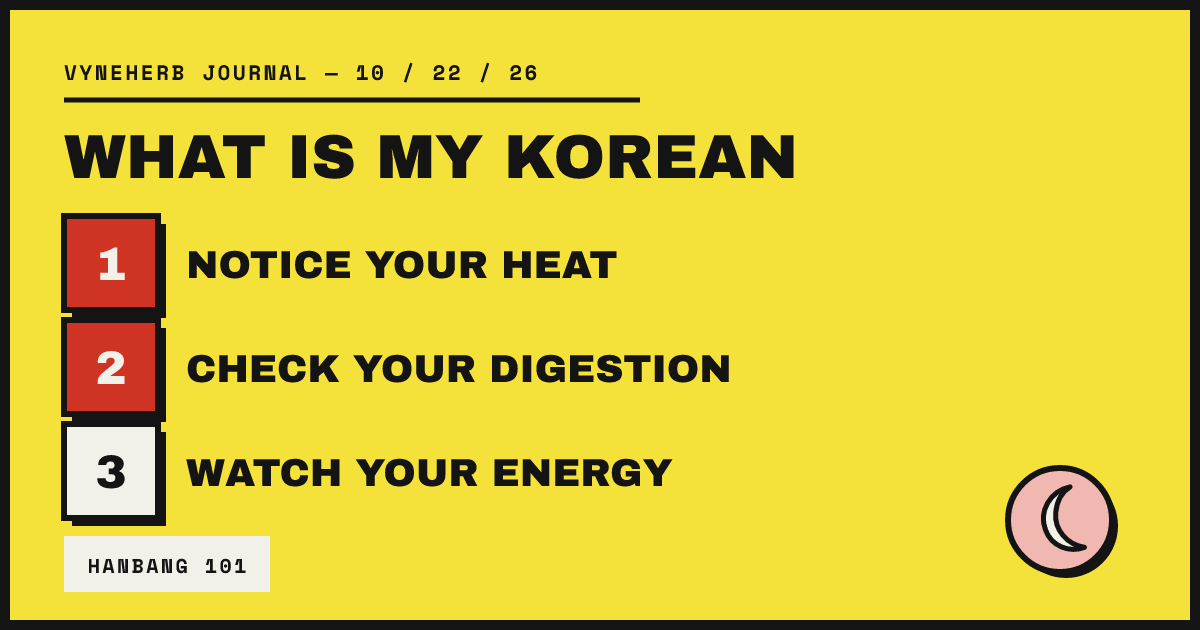
You don't need a clinic visit to start noticing patterns, though a licensed Korean medicine practitioner is the real authority if you want an actual diagnosis. At home, pay attention to three things over a week or two:
- Heat response: Do you crave ice water and struggle in heat, or do you reach for a blanket in a normal air-conditioned room?
- Digestion speed: Do you eat quickly and still feel hungry soon after, or does your stomach feel easily upset by rich, heavy meals?
- Energy pattern: Do you burn hot and crash, or do you run slow and steady but feel sluggish by afternoon?
Your answers won't give you a clinical diagnosis, but they'll point you toward a 'leaning' — hot or cold, fast or slow — that hanbang eating principles are built around.
What This Means for Your Daily Routine
Once you have a rough sense of your leaning, the seasonal hanbang logic starts to make more sense: warming broths and teas in cooler months if you tend cold, lighter and cooling foods if you tend hot, and portion and pace adjustments if your pattern is 'eats fast, feels full late.' This is also where a lot of people start building a simple herbal routine instead of guessing — if you're not sure where to begin, VYNEHERB's Discovery Kit is designed as a low-commitment way to sample a few practitioner-reviewed formulas and notice which one actually fits how your body runs, rather than committing to one product before you understand your own pattern.
Frequently Asked Questions
Can my Korean body type change over time?
No — in Sasang theory, your constitutional type is considered fixed for life. What can shift is how balanced or imbalanced you are within that type, depending on season, stress, and habits.
Is a Korean body type test medically accurate?
Research tools like the QSCC questionnaire exist and are used in Korean clinical settings, but self-tests online are a rough starting point, not a diagnosis. A licensed Korean medicine practitioner can give you a more reliable read.
Is Sasang typology the same as five-element theory?
No. Five-element theory is shared across East Asian medicine, while Sasang is a distinctly Korean system built on four constitutions and the organ balances behind them, though some practitioners use both together.