Korea's slow-aging diet, known at home as jeosok-noha (저속노화), is an eating pattern built around one goal: keep blood sugar from spiking and crashing, so the body ages a little more gently. It's a food philosophy centered on steadying blood sugar through whole foods, rather than through restriction. In practice that means swapping plain white rice for a mixed grain-and-bean bowl and putting vegetables and protein on the plate before refined carbs. The idea feels brand-new online, but it echoes a much older hanbang instinct: how and when you eat shapes how your whole body feels, not just your waistline.
Key takeaways
- Jeosok-noha is a loose set of Korean eating habits built around one idea: keep blood sugar steady, and the body ages more gently.
- The trend traces back to a geriatric medicine doctor in Seoul whose social posts about blood sugar and daily habits caught on widely.
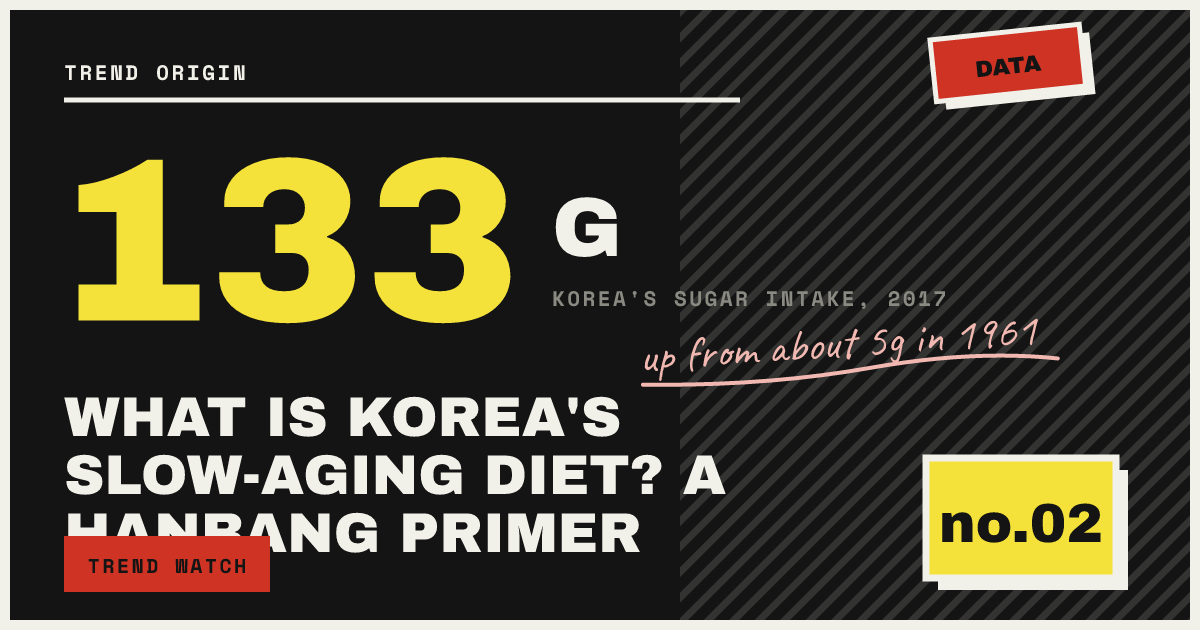
- Koreans' average daily sugar intake rose from about 5 grams in 1961 to roughly 133 grams by 2017, a shift commentators link to the trend's popularity.
What Is Korea's Slow-Aging Diet?
Jeosok-noha literally means "slow aging," and in practice it describes a way of eating built around whole grains, beans, and vegetables instead of refined grains and red meat. It isn't a diet in the Western sense of cutting a food group or counting points.
The underlying belief is that avoiding high-fat, high-glycemic ingredients keeps the body from being stressed by sharp blood sugar swings. The broader "slow aging" idea it borrows from is less about any single food list and more about a lifestyle that extends healthy years through steady, low-stress daily habits.
Where Jeosok-Noha Came From
The term making the rounds, jeosok-noha, started with a geriatric medicine doctor in Seoul who began posting about blood sugar and daily habits on social media. From there it spread fast among people in their 20s and 30s posting their own homemade meals.
Part of the appeal is generational. Koreans' average daily sugar intake climbed from roughly 5 grams in 1961 to about 133 grams in 2017, a jump nutrition commentators tie to the metabolic concerns the trend is reacting against. Food brands have noticed, too — Korean companies have begun reformulating staples like gochujang and kimchi with less sugar and sodium, chasing the same health-conscious audience.
The Hanbang Roots Behind the Trend
Jeosok-noha sounds modern — a doctor, a hashtag, a grain ratio — but the underlying logic is pure hanbang. Traditional Korean medicine never treated flavor as purely sensory. In hanbang, the five flavors are understood as therapeutic signals, not just taste, each one tied to how a food is believed to act on the body.
That same attentiveness shows up at the table more broadly. Korean meals carry a "bibim" philosophy — being present during the meal — which is credited with promoting better digestion and keeping people full on less food. And Korean cooks have long chased a specific feeling in a bowl of soup: a refreshing, comfortable taste that simply makes a person feel good inside. That's the same "feeling light" sensation jeosok-noha is chasing with grains and vegetables instead of broth.
What Does a Slow-Aging Plate Actually Look Like?
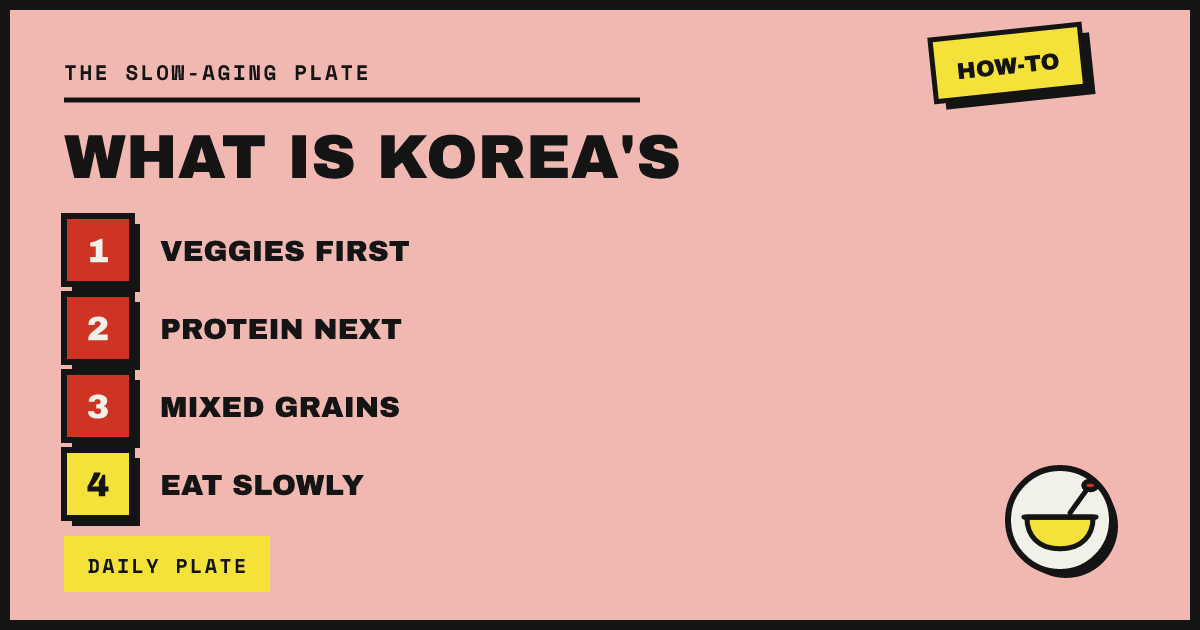
Strip away the branding and the plate is simple. The core swap is trading plain white rice for a mixed bowl built around lentils, using a widely shared ratio of two parts lentils to one part each of brown rice, oats, and white rice.
- Vegetables and protein go on the plate first; grains come last.
- Fermented side dishes add flavor without leaning on added sugar.
- Meals lean on whole grains, beans, and nuts for nutrients, plenty of vegetables and fruit, and fish or poultry over red or processed meat.
Does Eating Order Really Change Your Blood Sugar?
Yes — the order you eat food in changes how sharply blood sugar rises after a meal, and it's one of the easiest parts of jeosok-noha to borrow without buying anything new. Vegetables and protein slow how fast the stomach empties, so the carbohydrates that follow enter the bloodstream more gradually instead of all at once.
Pace matters just as much as order. A good share of the blood sugar benefit simply comes from not rushing through a meal in five minutes. Eating slower gives your body more time to register fullness before the plate is empty.
How to Start Without Overhauling Your Kitchen
You don't need Korean pantry staples to borrow the logic. Any mixed grain-and-legume swap — brown rice, lentils, oats, quinoa — standing in for half your usual white rice or bread does the same job. Build the plate with vegetables and a protein source first, then add the grain.
Eating slower and in order is easy on paper and harder in practice, especially when cravings hit between meals while new habits settle in. That's where a gentle herbal appetite suppressant can help — not as a substitute for the plate changes, but as backup for the moments your appetite outruns your intentions. If you manage diabetes or another blood sugar condition, talk with your doctor before changing how or when you eat.
Frequently Asked Questions
Is the slow-aging diet the same as keto or low-carb?
No. The pattern still relies on beans, tofu, and vegetables for protein and calories while pulling back mainly on red meat, processed food, and added sugar. Carbohydrates stay on the plate; they're just chosen and ordered differently.
Do I need special Korean ingredients to try it?
No. The principle — whole grains and legumes over refined carbs, vegetables and protein first, slower meals — translates directly to brown rice, lentils, oats, and everyday American produce. No specialty grocery trip required.
Can a diet actually slow aging?
Not in a medical sense, and no eating pattern can treat, prevent, or reverse aging as a process. "Slow aging" here is aspirational branding for a habit of steadier energy and fewer blood sugar swings, not a clinical claim. If you have diabetes, prediabetes, or take medication that affects blood sugar, check with a healthcare provider before adjusting your eating pattern.