Yes, your gut and your skin are in constant conversation. When gut bacteria fall out of balance, the body produces more inflammatory signaling, and for many people that shows up first on the face as breakouts, dullness, or redness. This gut-skin axis is one of the most talked-about connections in dermatology right now, and it lines up with something Korean herbal medicine, or hanbang, has taught for centuries: a clear complexion starts with a calm digestive system.
Key takeaways
- An imbalanced gut microbiome can trigger the inflammation and hormone shifts linked to breakouts, a connection researchers call the gut-skin axis.
- Fermented foods and fiber-rich meals support the kind of gut bacteria diversity associated with calmer, clearer-looking skin.
- Traditional Korean hanbang medicine has treated the skin as a reflection of digestive health for centuries, long before the term gut-skin axis existed.
Does Gut Health Affect Acne?
Yes. A gut that's out of balance can send inflammatory signals through the bloodstream that land squarely on your face, often as the breakouts you've been trying to treat with spot gels and serums. Dermatology research increasingly points to the gut-skin axis, the communication loop between digestive bacteria and the skin's immune response, as a hidden driver of adult acne, especially along the jawline and cheeks.
That doesn't mean topical skincare is useless. It means the breakouts that won't budge no matter what you put on your face may have less to do with your routine and more to do with what's happening lower down.
What Is the Gut-Skin Axis?
The gut-skin axis describes the two-way relationship between your gut microbiome and your skin's barrier and immune function. When gut bacteria are diverse and balanced, they help regulate inflammation throughout the body. When that balance tips, a state called dysbiosis, the gut lining becomes more permeable and lets inflammatory byproducts slip into circulation.
Your skin, as the body's largest organ, often absorbs the fallout first. Redness, dullness, and breakouts are some of the most visible ways internal inflammation surfaces externally.
The Hanbang View: Skin Reflects the Gut
Long before Western dermatology coined the term gut-skin axis, Korean hanbang medicine treated the face as a mirror of digestion. Practitioners paired skin-brightening herbs like licorice root, or gamcho, with formulas meant to settle the stomach, on the belief that a calm gut was the real foundation of an even, clear complexion.
Fermented staples of the Korean table, think kimchi, doenjang, and various herbal infusions, were never just side dishes. They were daily maintenance for the gut bacteria now known to influence inflammation and skin tone.
What Habits Make Gut-Linked Breakouts Worse?
Refined sugar and heavily processed foods are two of the biggest offenders. They feed less favorable gut bacteria and spike insulin, both of which ramp up the inflammatory signaling that can show up as excess sebum and breakouts.
- Frequent alcohol, which can disrupt gut lining integrity and dehydrate skin.
- Low-fiber, low-plant meals that leave beneficial bacteria undernourished.
- Chronic short sleep, which throws off the same hormonal signals tied to gut balance.
How to Support Your Gut for Clearer Skin
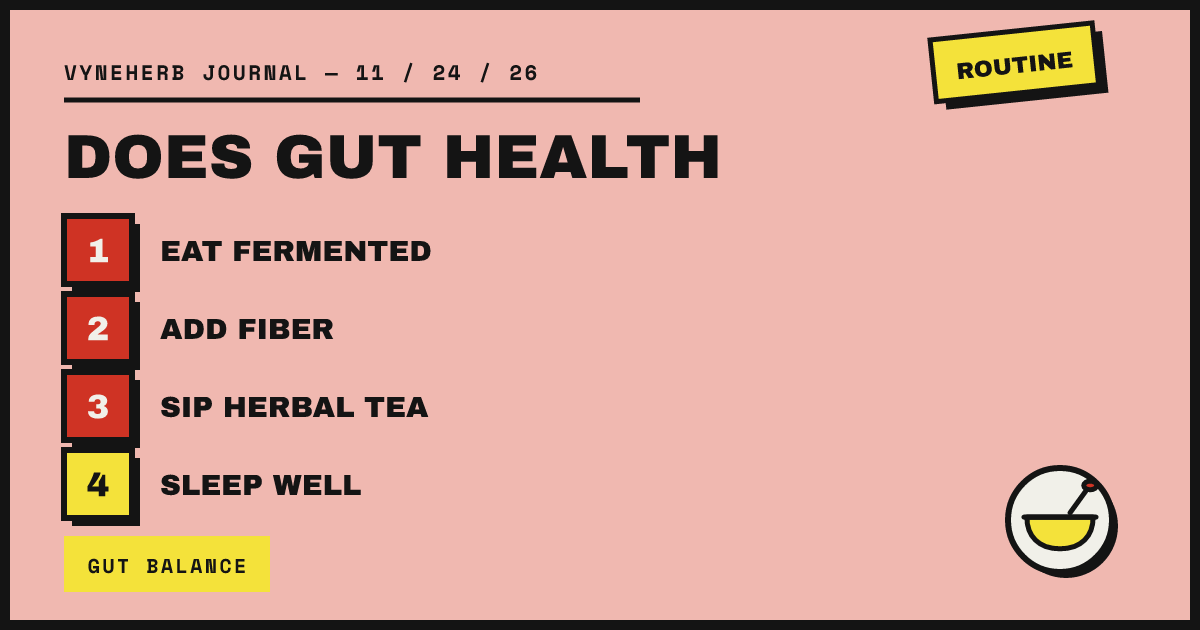
Small, consistent habits tend to do more for gut balance than any single "detox." Start by rotating fermented foods like kimchi, plain yogurt, or miso into your week, and build meals around fiber-rich vegetables and whole grains that feed beneficial bacteria.
A daily herbal habit can help too. VYNEHERB's Belly Light is formulated with traditional gut-soothing herbs meant to support everyday digestive balance, a gentle, non-drug way to back up the habits already doing the real work.
None of this replaces a dermatologist's care for diagnosed acne or skin conditions, but it does address a root layer that topical treatments alone can't reach.
Does Stress Make Gut-Related Breakouts Worse?
Yes, stress and gut-linked breakouts tend to feed each other. Cortisol released during chronic stress can alter gut bacteria composition and gut lining permeability, adding another layer of inflammation on top of whatever your diet is already doing.
This is part of why breakouts often cluster around high-stress periods, even when your skincare routine hasn't changed at all.
Frequently Asked Questions
Can probiotics clear up acne?
Probiotics may help support a more balanced gut microbiome, which is linked to calmer-looking skin, but they aren't a guaranteed fix for acne and shouldn't replace a dermatologist's guidance for persistent breakouts.
How long does it take for gut changes to show on skin?
Most people need at least a few weeks of consistent dietary changes before noticing a difference, since both skin cell turnover and microbiome shifts take time.
Is dairy really linked to breakouts?
For some people, dairy can trigger inflammatory or hormonal pathways that contribute to breakouts, though the effect varies widely from person to person and isn't universal.