
Yes — a wave of 2026 clinical research shows that GLP-1 drugs like semaglutide and tirzepatide can measurably reduce how much people drink and how strongly they crave alcohol. Scientists now believe these medications quiet the same brain reward circuitry involved in food cravings, and that overlap is turning into one of the most talked-about side conversations of the GLP-1 era. Here's what the research actually shows, why doctors are still cautious about it, and how anyone working on their own cravings — with or without a prescription — can support the habit from the outside in.
Why Are GLP-1 Users Suddenly Drinking Less?
It started as an offhand comment patients kept repeating to their doctors: wine just didn't sound good anymore. The discovery emerged from patient reports rather than clinical trials. People prescribed medications like Ozempic, Wegovy, and Mounjaro began telling their doctors that alcohol had lost its appeal. That anecdotal pattern has since become a real research focus, and a 2026 trial out of the University of Colorado added hard data behind it.
The GLP-1 drug semaglutide — the same ingredient in Ozempic — reduced alcohol consumption in moderate to heavy drinkers, offering potential new treatment options for people coping with alcohol use disorder. A separate NIH-backed trial found something similar: people with alcohol use disorder and obesity drank less when treated with a GLP-1 drug in addition to cognitive behavioral therapy.
What Does the Research Actually Show?
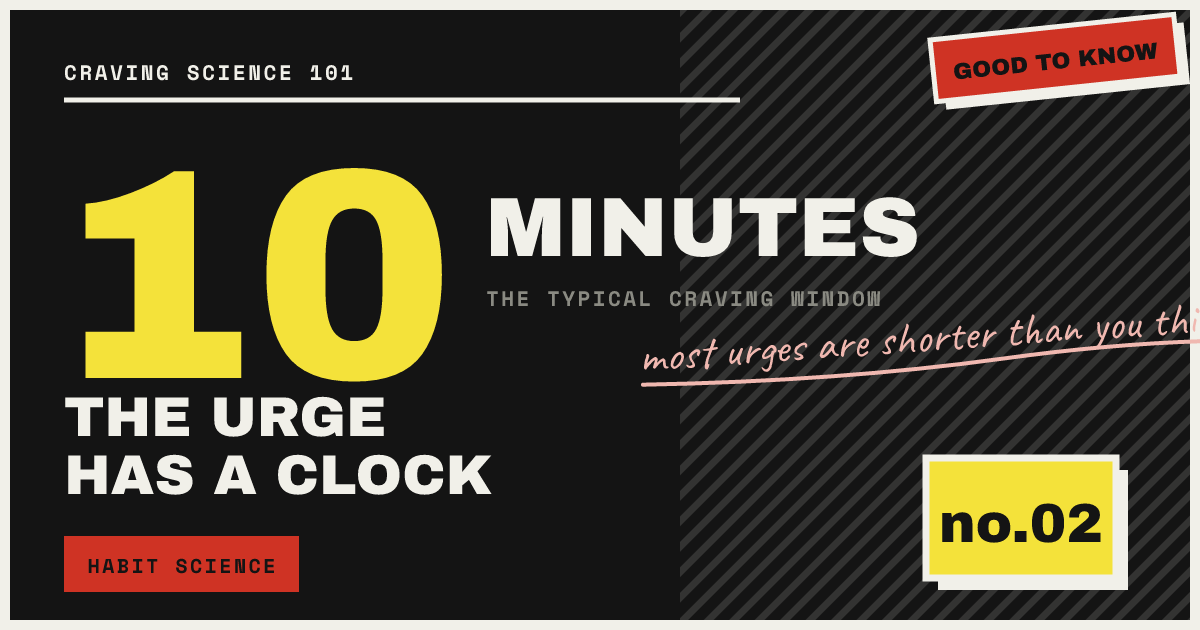
The numbers being floated are striking. Morgan Stanley's analysis of studies suggests up to a 75% reduction in alcohol consumption among all patients taking GLP-1 drugs. Other reviews land closer to the middle: GLP-1 receptor agonists appear to affect brain reward pathways that control both food and alcohol cravings, with clinical studies showing a 50 to 70 percent reduction in alcohol consumption among users, involving dopamine regulation in the brain's mesolimbic reward system.
Interestingly, the effect isn't usually described as an aversion — people don't feel sick at the thought of a drink. It's quieter than that: the pull just isn't there. That single detail is what's made this such a rich area for craving science generally, because it hints that a lot of our wanting — for a drink, a dessert, a second helping — runs through one shared circuit rather than dozens of separate ones.
Is This the Same System Behind Food Cravings?
Largely, yes. GLP-1 medications were designed to slow digestion and signal fullness to the brain, but the reward-blunting effect seems to spill over into anything tied to dopamine-driven "wanting" — sugar, ultra-processed snacks, and now alcohol. Researchers studying tirzepatide found it consistently reduced alcohol consumption and dampened its pleasurable effects, lowering behavioral responses and blocking dopamine release in the brain, even when alcohol was delivered directly to the reward center.
That's a meaningful finding for medicine. It's also a useful reminder for the rest of us: a craving is rarely about willpower alone. It's a brain-reward event, and it responds to habits, timing, and environment just as much as it responds to any one substance.
Hovenia Dulcis: The Korean Herb Tied to the Evening Reach
Long before GLP-1 headlines, Korean herbal tradition already had a go-to plant for the evening reach: Hovenia dulcis, known locally as "heotgae namu." For generations, its fruit and seed have shown up in teas and tonics meant to be sipped around social drinking occasions, prized in hanbang practice as a gentle, warming botanical rather than a cure for anything specific.
Modern researchers have taken an interest in the compounds native to the plant, though the science is still developing and nothing here should be read as a treatment claim. What's worth borrowing from the tradition isn't a promise — it's the ritual: reaching for a warm, herbal pour instead of (or alongside) a drink, simply as a way to give the moment a different shape.
Supporting Your Own Cravings Without a Prescription
It's important to be clear about the lane here: GLP-1 medications are prescription drugs, and this research — however compelling — is not a reason to start or stop any medication on your own, and it isn't evidence that any supplement works the way these drugs do. Reducing alcohol cravings is not an approved or intended use of GLP-1 medications, and that nuance matters as the cultural conversation runs ahead of the clinical one.
What the research does offer the rest of us is a useful mental model: cravings are reward-circuit events, and they can be interrupted. For everyday moments — a 4 p.m. wine pour that's really about winding down, or a nightly snack that's really about stress — having something ready to reach for matters more than sheer willpower. Many VYNEHERB customers keep MooMoo Jelly, our herbal craving-control jelly, on hand for exactly that in-the-moment pull, so the urge has somewhere to go before it turns into a decision you didn't plan to make.
A Simple Evening Ritual to Redirect the Reach
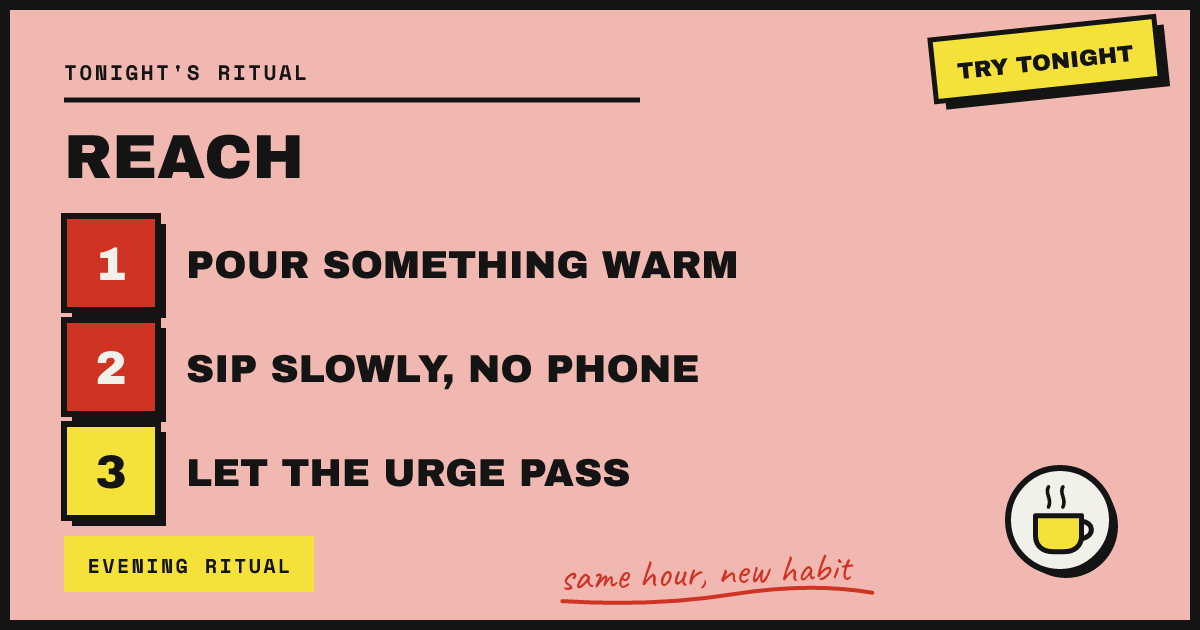
You don't need a prescription to work with your own reward circuitry. Try this the next time the 6 p.m. urge shows up, whether it's for a glass of wine or a bag of chips: pour something warm instead, sit with it away from screens for a few minutes, and notice whether the pull is still there once the cup is empty.
This isn't about restriction — it's about giving the moment enough space to pass on its own, the way cravings tend to do when they're not immediately answered.
Frequently Asked Questions
Do GLP-1 drugs actually reduce the desire to drink alcohol?
Multiple 2026 studies suggest yes, for many users. Researchers believe this happens because GLP-1 medications quiet the same brain reward pathways involved in both food and alcohol cravings, though individual results vary and it is not an approved use of these drugs.
Can herbal supplements replace GLP-1 medications for cravings?
No. Herbal supplements are formulated to support everyday appetite and craving habits, not to replicate prescription medications. If you're considering starting, adjusting, or stopping any medication, talk with your healthcare provider first.
Why does craving science matter beyond alcohol?
Cravings for alcohol, sugar, and snack foods appear to share overlapping reward circuitry in the brain. Understanding that shared system helps explain why simple habit interruptions — like a ritual swap at the moment an urge hits — can be effective regardless of what you're craving.