How long should you walk after eating? Most of the newest research lands on the same answer: about 10 minutes, started within 30 minutes of finishing your meal, is enough to measurably soften the blood sugar rise that follows a plate of food. That is not a new diet rule so much as an old one — Korean households have called this habit sanchaek, the after-dinner stroll, for generations. You do not need leggings, a treadmill, or a step count. You need about ten minutes and a door.
Key takeaways
- Walking for about 10 minutes within 30 minutes of a meal is linked to smaller post-meal blood sugar spikes than walking later or taking one long daily walk instead.
- Three short walks spread across a day's meals have outperformed one long walk of equal total time in several glucose-monitoring studies.
- Even 2 to 5 minutes of easy walking after eating produces a measurable, smaller blood sugar rise compared with staying seated.
How Long Should You Walk After Eating?
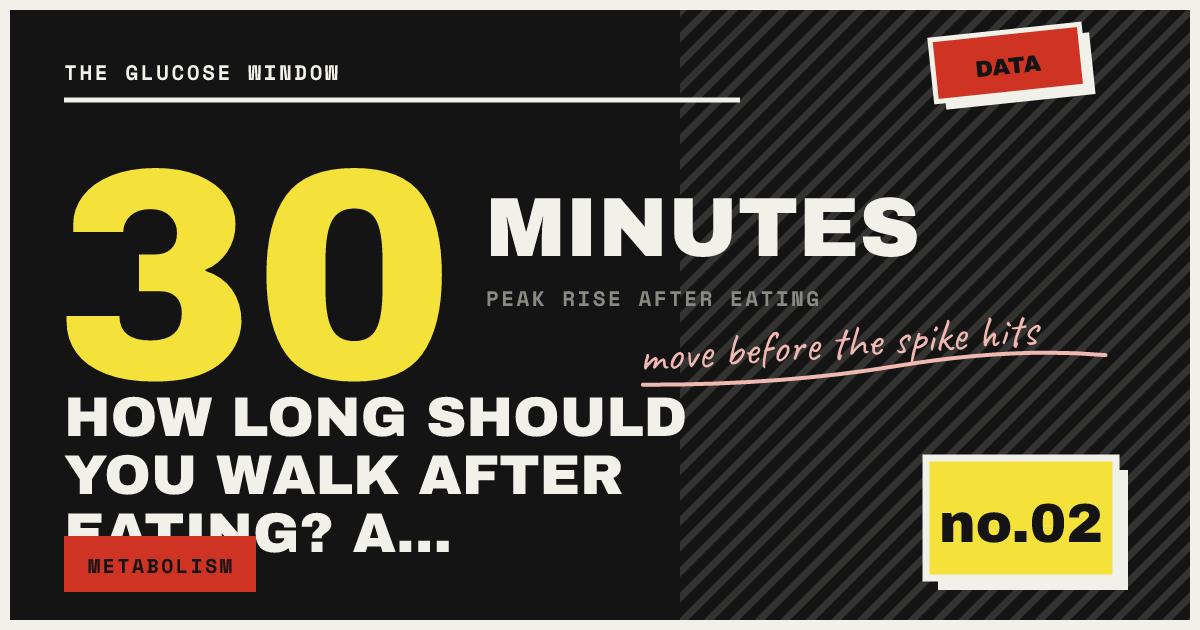
The short, research-backed answer is about 10 minutes, started within roughly 30 minutes of finishing a meal. A 10-minute walk after dinner shrinks the blood sugar spike that follows your biggest meal and helps food leave your stomach faster. That window matters because blood sugar often peaks between 30 and 90 minutes after a meal, so movement timed to that rise is doing real work.
You do not have to walk far or fast to see the effect. A study from New Zealand found that walking for just 10 minutes after each main meal reduced daily blood glucose levels more effectively than completing a single 30-minute walk at any arbitrary time during the day. Three short walks appear to beat one long one when the goal is steadier blood sugar, not just total minutes logged.
Why Timing Matters More Than Minutes
Walking works less like a workout and more like a release valve. Contracting muscles pull glucose from the bloodstream to fuel themselves, acting like a sponge at exactly the moment a meal delivers its sugar load. That is why timing beats duration: a longer walk taken hours later, after the sugar has already been absorbed, does less for that particular spike.
Korean researchers covering the topic have been direct about it. Walking lightly for about two minutes right after a meal helps blunt the rise in blood sugar that follows eating, according to medical experts. In one frequently cited trial, walking 10 minutes after each meal lowered the three-hour post-meal rise in blood sugar by an average of 12% compared with a single 30-minute walk once a day, with the largest reduction, 22%, coming after dinner.
The Korean Sanchaek: A Habit Older Than the Science
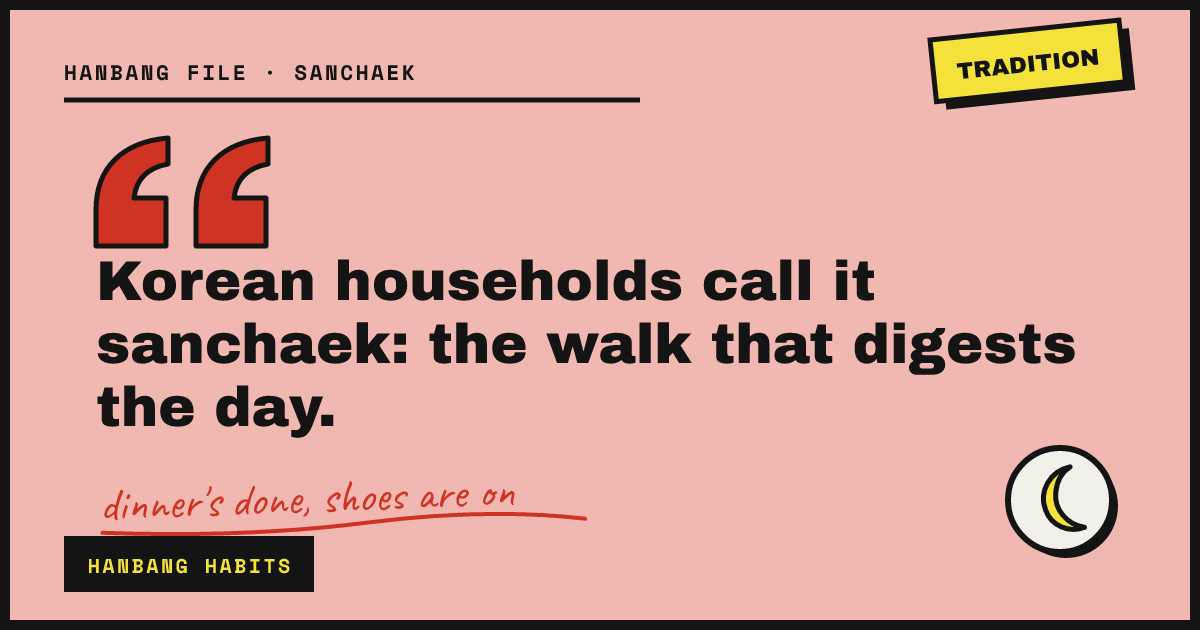
Long before glucose monitors existed, Korean households built the after-dinner walk into ordinary life. Traditionally, Koreans believe gentle movement after eating helps digestion and prevents discomfort. Known as sanchaek, it is never framed as exercise — people stroll through apartment complexes, neighborhood streets, and riverside paths, often slowly, without workout clothes or goals.
Modern trials are, in effect, confirming the instinct. Even a 5 to 10 minute walk after meals can improve digestion and reduce blood-sugar spikes. The hanbang view never separated digestion from overall balance — a calm, unhurried walk after dinner was simply part of eating well, not a chore tacked on at the end of it.
Does a 2-Minute Walk Really Count?
Yes, though more helps up to a point. Research shows that physical activity right after a meal, starting at a mere two to five minutes of walking, can have a beneficial impact on post-meal hyperglycemia. Two to five minutes of easy walking after a meal cut blood sugar by about 17% compared with staying seated.
Think of two minutes as the floor, not the ceiling. If you have ten, take them. If you only have two before the next meeting or a load of laundry, that is still a real, measurable win over staying on the couch.
Building the Habit Without Overhauling Your Day
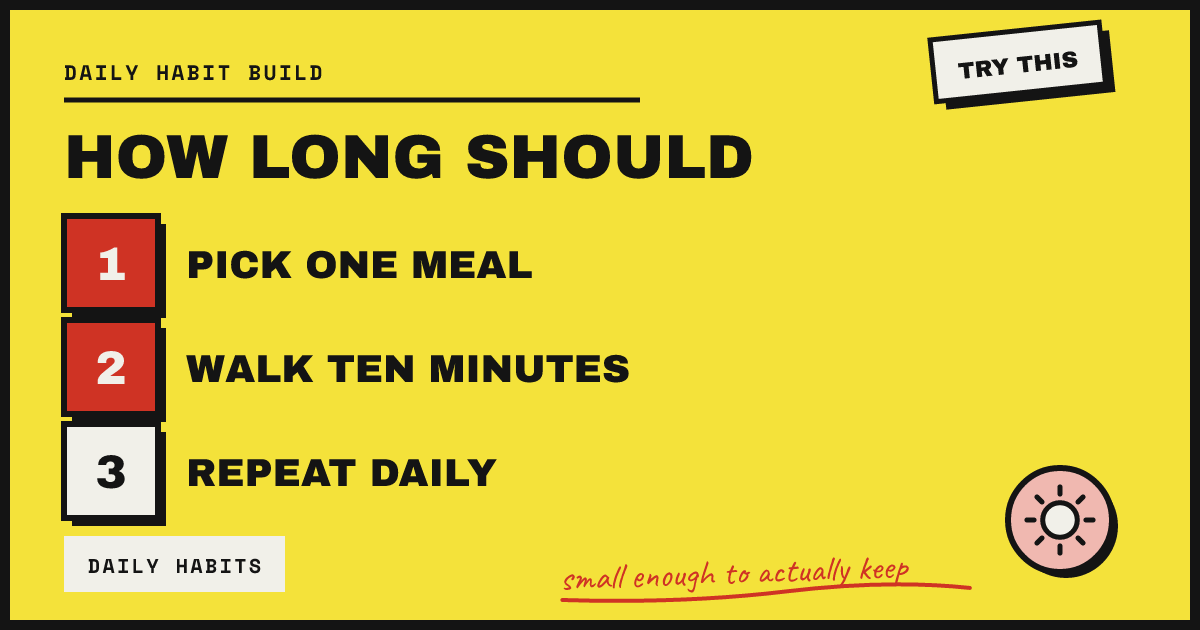
Pick one meal — dinner is the easiest place to start, since a 10-minute walk after dinner shrinks the blood sugar spike that follows your biggest meal — and attach a walk to it the way you would attach a seatbelt to driving: automatically, without negotiating. A loop around the block, a walk to take out the trash, or pacing during a phone call all count.
- Start with 5 minutes if 10 feels like too much to add right away.
- Walk at a pace where you can still hold a conversation.
- If a meal was heavy or you plan to move briskly, give your stomach 15 to 20 minutes first.
Pairing the Walk With Daily Metabolic Support
A post-meal walk handles the moment-to-moment response, but daily metabolism is built from habits stacked over weeks, not single walks. Some readers pair the habit with Slim Effector, an herbal formula made to support steady metabolic function as part of a daily routine — a companion to movement, not a substitute for it.
Think of the walk as the immediate lever and daily herbal support as the background one. Neither replaces a balanced plate, consistent sleep, or a conversation with your doctor about your own blood sugar picture — but together, they make "move a little after you eat" easier to keep doing on an ordinary Tuesday, not just the week you start a new habit.
Frequently Asked Questions
Is walking after eating better than walking before a meal?
For blood sugar specifically, yes. A 2009 study found that walking after dinner was more effective for blood sugar control than walking before. Walking before a meal still has value for overall activity, but the post-meal window is where the glucose benefit shows up most clearly.
What if I can only walk after one meal a day?
Choose dinner. If you can only walk after one meal per day, choose dinner, since it tends to be the largest meal for most people and shows the biggest measured improvement in several trials.
Does walking after eating help with weight loss, not just blood sugar?
The honest answer is that the evidence is thinner here. There is no evidence for that specifically, and post-meal walking has solid evidence for flattening blood sugar and no demonstrated effect on body composition. It is still a low-effort habit worth keeping for the blood sugar benefit alone.