Oral GLP-1 weight-loss pills are causing more reports of constipation than many people expect, and in several head-to-head comparisons, the pill forms are proving just as hard on digestion as the weekly shots — sometimes harder. If you've started one of the new daily tablets, or you're watching a family member navigate one, the bathroom trouble isn't in your head. It's a documented, dose-dependent side effect that's becoming a bigger part of the GLP-1 conversation as 2026 pushes these drugs further into the mainstream.
Why Are GLP-1 Pills Linked to More Constipation Than Shots?
GLP-1 pills slow down digestion in the same way the injections do, but daily oral dosing means your gut is adjusting to the medication every single day instead of once a week. The most common side effects of orforglipron noted in clinical trials were vomiting, diarrhea, nausea, upset stomach, and constipation. Add in the fact that appetite suppression means less food, less fiber, and often less water moving through the system, and you have a recipe for a sluggish gut.
How Common Is GLP-1 Pill Constipation, Really?
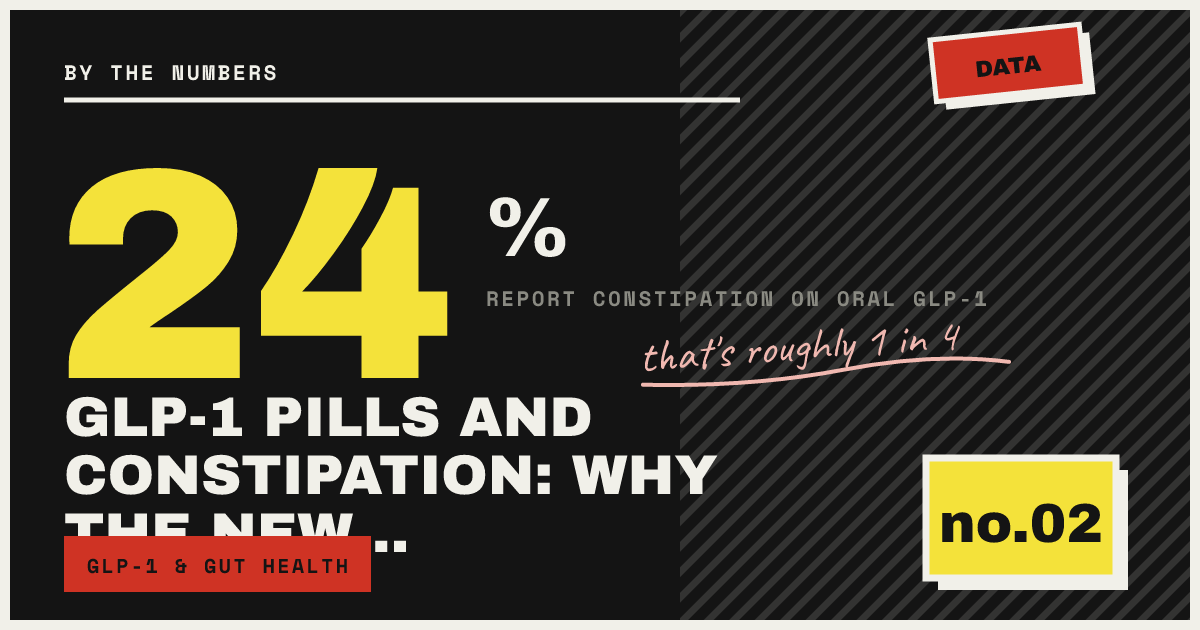
The numbers are higher than a lot of new users expect going in. In one comparison of FDA label data, Foundayo (orforglipron 17.2 mg daily) showed a 24% constipation rate versus 37% overall GI rate compared to placebo. Separately, Phase 3 trial data showed nausea hit up to 36% of participants, diarrhea up to 27%, and constipation up to 30%, with between 5% and 10.6% stopping the medication specifically because of side effects.
For context on how mainstream these drugs have become, 18% of US adults have tried a GLP-1, and 12% are currently taking them, per KFF survey data. That's a lot of people potentially dealing with this exact issue.
Pill vs. Shot: Is One Really Gentler on Your Gut?
Not necessarily. Comparing the two oral options directly, orforglipron showed nausea in 58–59% of participants in the ACHIEVE-1 trial, somewhat higher than the roughly 47% seen with oral Wegovy in OASIS-1, though both carry roughly 6–8% discontinuation rates due to GI side effects. Meanwhile, some analyses suggest the injectable forms aren't necessarily easier: tirzepatide (Zepbound) looks somewhat easier to tolerate overall from a GI perspective, with rates of nausea, vomiting, and constipation noticeably lower than the semaglutide options. In other words, the route of the drug — pill or injection — matters less than which specific molecule and dose you're on.
How Long Does GLP-1 Pill Constipation Last?
For most people, digestive side effects are worst during dose increases and settle as the body adjusts over several weeks. Orforglipron's most common side effects are gastrointestinal — nausea, diarrhea, constipation, and vomiting — which are dose-dependent, tend to be worst around each dose increase, and usually settle as the body adapts. That said, some people carry a low level of constipation for as long as they're on the medication, especially if fiber and fluid intake haven't caught up with their smaller meals. If constipation becomes severe, is paired with vomiting or intense cramping, or simply doesn't improve, that's a conversation for your prescribing clinician — never something to self-manage through a medication change.
Gentle Ways to Support Regularity Without Overcorrecting
Whether or not you're on a GLP-1 medication, the basics of regularity haven't changed: water, fiber, and movement still do most of the work. But when appetite is genuinely lower, it can be hard to hit those fiber targets through food alone. This is where a gentle, non-drug formula can fit into a routine without fighting against what your prescriber has already set up. Our Herbal Laxative draws on traditional Korean botanicals long used in hanbang practice to support natural bowel regularity, offering a softer option than harsh over-the-counter stimulants for people who just need a nudge, not a jolt.
- Sip water consistently through the day, not just at meals
- Add fiber gradually — a sudden spike can backfire into more bloating
- Keep light daily movement, even a short walk, to support gut motility
- Talk to your prescriber before adding any new supplement alongside a GLP-1 medication
Frequently Asked Questions
Is constipation worse with GLP-1 pills than GLP-1 shots?
It depends on the specific drug and dose rather than the pill-versus-shot format alone. Some trial comparisons show oral options with similar or even higher rates of nausea and constipation than weekly injections of the same molecule.
How long does GLP-1-related constipation typically last?
Digestive side effects are usually most intense during dose increases and tend to ease over several weeks as the body adjusts. Some people experience a lower, ongoing level of constipation for as long as they're taking the medication, especially with reduced food and fluid intake.
Can herbal support help with GLP-1 pill constipation?
Gentle herbal formulas can support your body's natural regularity as part of a broader routine of hydration, fiber, and movement, but they are not a substitute for medical guidance. Always check with your prescribing clinician before combining any new supplement with a GLP-1 medication.