You can maintain weight loss after stopping Ozempic, Wegovy, Mounjaro, or Zepbound, but it takes deliberate work because the appetite-quieting effect of the drug fades once it leaves your system. The honest research on this is mixed: some reviews show fast, significant regain, while newer real-world data shows many people hold steady if they've built the right habits first. The months right after your last dose are the window that decides which path you're on.
Key takeaways
- People who stop taking GLP-1 drugs such as Ozempic and Wegovy are projected to regain their shed pounds within about 1½ years, based on a review of existing research.
- A 2021 clinical trial found that participants who stopped semaglutide regained roughly two-thirds of their prior weight loss within a year, while those who continued treatment kept losing weight.
- Patients who received exercise counseling after their last known GLP-1 prescription date were nearly twice as likely to maintain their weight loss as those who didn't.
How to Maintain Weight Loss After Stopping Ozempic?
The short answer is that you maintain it by replacing what the drug was doing for your appetite with habits your own body can run on. GLP-1 drugs work by slowing digestion and quieting hunger signals in the brain; once the medication clears your system, those signals come back online. The people who hold their results tend to share a short list of moves: eating protein first, lifting weights, keeping fiber high, sleeping enough, and — if they taper — doing it slowly and with their provider's guidance rather than stopping cold.
None of this guarantees zero regain. But it shifts the odds, and the data increasingly backs that up.
Why Does the Weight Come Back So Fast?
A review found that people who stopped weight-loss drugs regained weight about four times faster than people who had lost weight through diet or exercise alone. Part of the reason is biological. When you lose weight — especially quickly — your metabolic rate slows down, and a portion of that loss comes from lean muscle tissue, which is what primarily burns calories.
GLP-1 medications had been quietly overriding that biological pushback the whole time you were on them. GLP-1 medications temporarily blunt that biological pushback. Once it's gone, hunger hormones like ghrelin rise, calorie burn drops slightly, and old cravings can resurface — which is exactly why habit-building matters more than willpower here.
Should You Taper Instead of Quitting Cold Turkey?
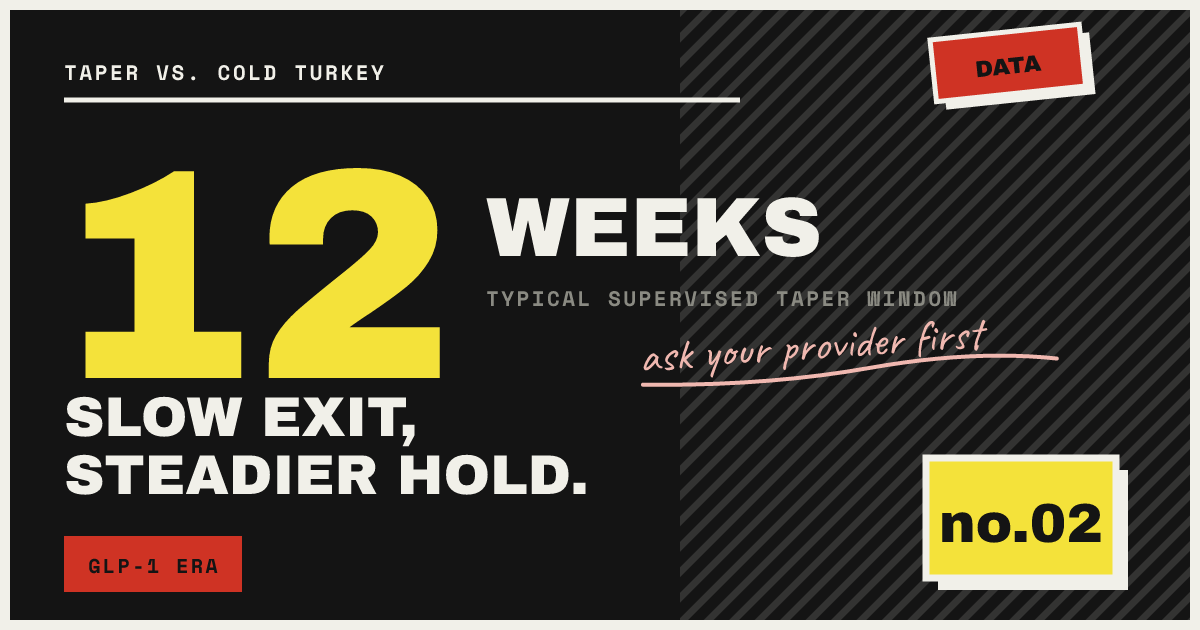
Early evidence suggests a slow taper may help more than stopping abruptly. In a Danish study, researchers found that tapering the drug — instead of a hard stop — could potentially prevent weight regain. Researchers had data for 85 patients at 26 weeks after stopping semaglutide, and found that they maintained a stable weight.
This is one study, not a guarantee, and tapering should always be planned with a healthcare provider rather than done on your own. But it reframes stopping a GLP-1 as a transition to manage, not a light switch to flip.
Protect Muscle So Your Metabolism Doesn't Work Against You
Muscle is the hidden variable in all of this. Roughly 25% to 39% of the weight lost on GLP-1 therapy can come from lean mass, including muscle. Less muscle means a lower resting calorie burn, which makes it easier to slide into a surplus even while eating the same amount you did on the medication.
The fix is unglamorous but effective: resistance training two to three times a week and consistent protein at meals. It's also worth knowing that regain isn't inevitable for everyone. A new analysis from Cleveland Clinic, involving nearly 8,000 patients, found that patients treated for obesity lost an average of 8.4% of their body weight before stopping the medication and regained an average of 0.5% after one year. Among those treated for obesity, 55% gained weight after stopping, while 45% either continued losing weight or maintained their weight. The split tells you this is winnable — it just depends heavily on what you do after the last dose.
Building New Appetite Habits Before the Drug Leaves Your System
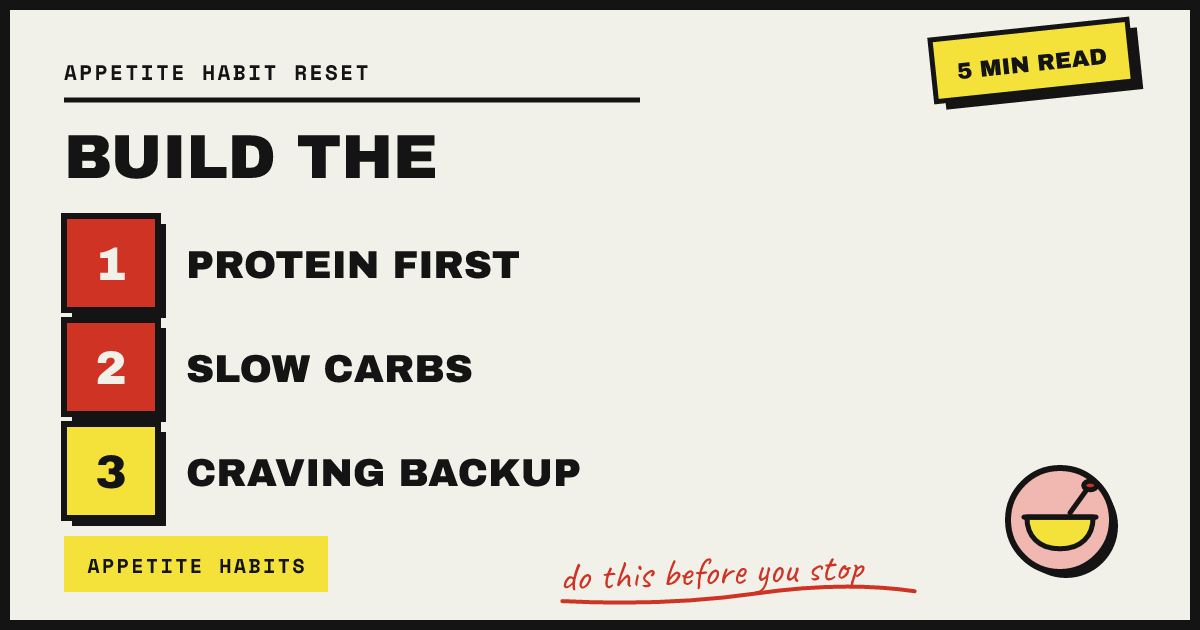
The best time to build maintenance habits is while you're still on the medication, not after. Start plates with protein, add a non-starchy vegetable, and let refined carbs come last. Keep fiber consistent through the day so fullness doesn't depend entirely on the drug.
It also helps to have something concrete for the exact moment a craving hits — the 4 p.m. slump, the after-dinner sweet tooth — since that's usually when old habits quietly creep back in. A quick, low-effort option like VYNEHERB's MooMoo Jelly can give you something to reach for in that gap instead of defaulting back to whatever's closest. It's herbal appetite support for the habit, not a substitute for the medication or a treatment for any condition — just a small tool for the in-between moments while your body relearns its own fullness cues.
The Hanbang View: Supporting Appetite the Low-and-Slow Way
Korean herbal medicine, or hanbang, has never treated appetite as something to override with force. The traditional approach favors steady, gentle rebalancing of digestion and metabolism over time, using warming herbs and bitter roots that have been part of Korean wellness practice for centuries. That philosophy sits in a completely different lane from prescription GLP-1 drugs — it's not a replacement, and it's not designed to match their effect.
Where it fits is in the daily, boring middle: the habit layer that keeps you consistent whether or not you're on a medication. If you're navigating an off-ramp, it's worth talking to your doctor about your plan before changing any prescription, and thinking of herbal support as one small piece of a much bigger lifestyle picture.
Frequently Asked Questions
Is it normal to feel hungrier after stopping Ozempic?
Yes. GLP-1s help regulate appetite, so expect your appetite to return to "normal" once you stop treatment, and cravings that were silenced with the medication usually return, too. This is a known, expected effect of discontinuing the drug, not a sign that anything went wrong.
How long does it take to regain weight after stopping a GLP-1?
Timelines vary by study, but many reviews point to the first year as the critical window. Research suggests months six through twelve are when most regain occurs, and people who maintained the most weight loss at that point tended to have robust exercise habits, high protein intake, and support structures in place.
Can herbal supplements help with appetite after stopping a GLP-1 drug?
Herbal supplements aren't a replacement for prescription medication and shouldn't be used to start or stop a GLP-1 on your own. They can, however, support the daily habit of eating mindfully and managing cravings as your body readjusts — always alongside guidance from your healthcare provider.